Gabriel shares new book
Over the years, Ellen Katsi'tsakwas Gabriel has considered writing a book charting her history of activism and role in the Siege of Kanehsatake.
“But that’s easier said than done,” Gabriel said.
It was a conversation with historian Sean Carleton, who teaches Indigenous Studies at the University of Manitoba, that got the ball rolling on the mountainous project of getting her thoughts down in a book. The two started officially collaborating in 2019, deciding that the book would be finished how it was started, with a conversation.
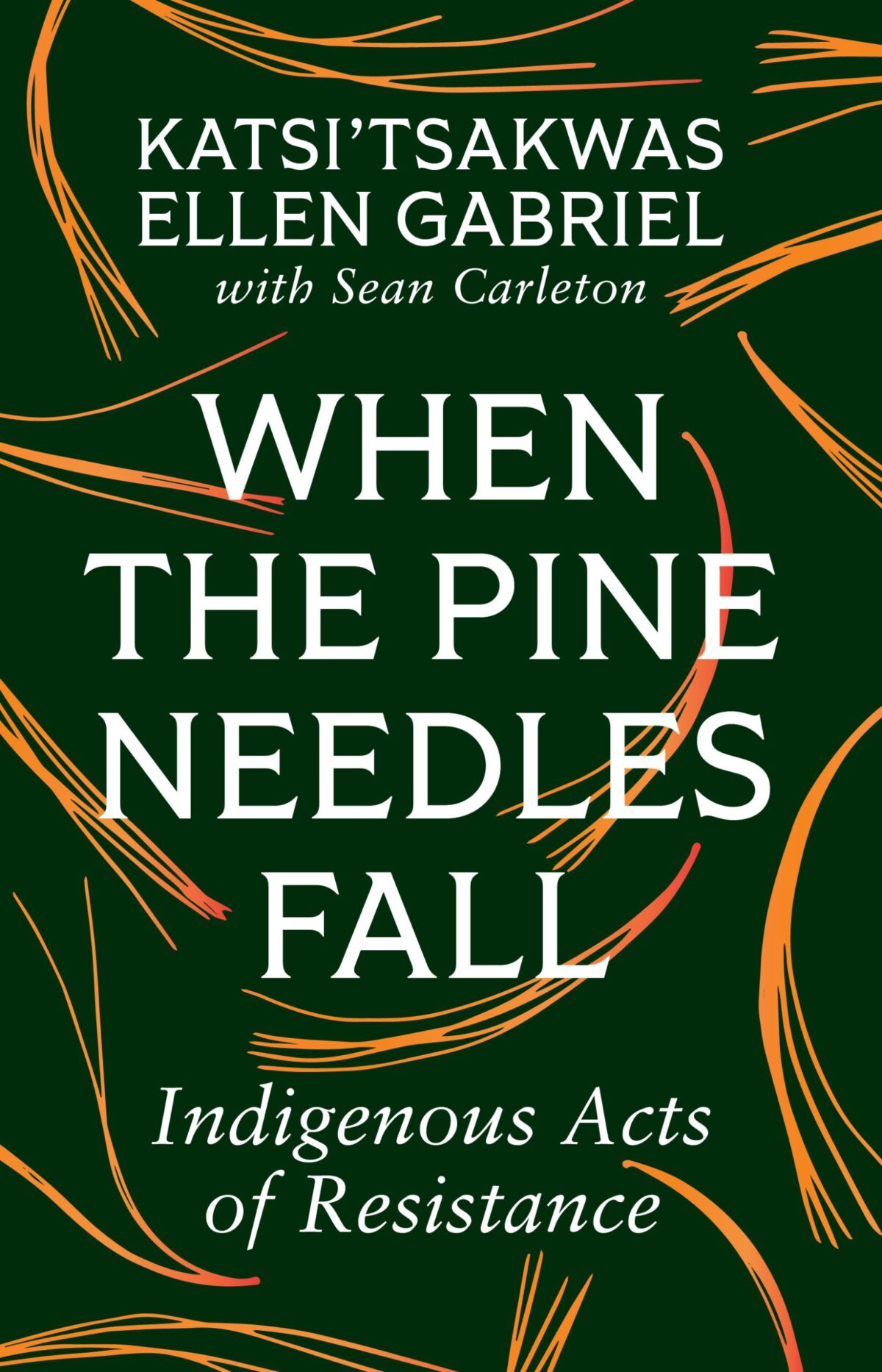
Five years on, When the Pine Needles Fall: Indigenous Acts of Resistance is finally ready for release in the form of nine chapters of transcribed conversation between Gabriel and Carleton.
“I’m not an academic, I’m an activist, so this format was really ideal for me,” Gabriel said. “It’s much easier to have a discussion than to actually sit down and write something that you might get frustrated with.”
By transcribing the conversations as they were spoken, Gabriel’s voice is brought to life, with Carleton explaining in the preface that his role was to create space and amplify her message, rather than to exploitatively extract Indigenous knowledge, as often is the case with academic research.

“Ellen has a long history of being misrepresented in the media from 1990 and throughout her career. So it was really important that people be able to read Ellen in her own voice, and to actually have her control that narrative,” Carleton said.
The duo initially started with a goal of around 30 hours of discussions that would then be edited down to make the book – but it became quickly apparent that the task would take more time than that.
“We ended up doing about 60 hours of interviews, because Ellen’s life is amazing and she does so many more things than I think even she realizes. Over it all, she found a way to bring it back to these common subjects that ended up being the chapters,” Carleton said.
Chapters include topics like “The Land Is Our Teacher,” “Women’s Rights,” “The Art of Resistance,” and “Indigenous Internationalism.”
The stories and lessons detailed in each chapter should be meaningful to Indigenous and non-Indigenous readers alike, Gabriel said.
“For me, the hope is – and maybe it’s a lofty idea – that people will learn something, and get motivated to help us, and to actually make the changes that we need to have a better life,” she said.





Gabriel said she’s hopeful that the conversational format can make the book more accessible, and that these topics can be used as teaching tools for generations to come – for Indigenous and non-Indigenous readers alike.
“It’s all about education. It’s all about everybody getting involved in protecting their rights and not relying on some entity to do it for them, because they’re not going to,” Gabriel said.
“This book is about taking those priorities of our ancestral teachings, of what they knew is really important. Yes, it’s good to have a good life, to feed your family and have clothes on your back, but if you don’t have the land and you’re cut off from your relationship with the land, then we’re doomed.”
Gabriel still maintains hope for future generations, a theme that she and Carleton revisit frequently in the book, especially in the final chapter. A lot of her hope is rooted in the youth, and she is hopeful that the conversations between her and Carleton can be used as a guide for youth fighting against settler colonial systems.
“The most important thing that our ancestors did for us was that they fought like hell to keep our language, they fought like hell to try and protect what land we do have in Kanesatake,” she said.
“There were people who actually worked on getting us this far, and we need to encourage the youth to continue this struggle, because it’s not over. That’s what I want people to know.”
Sign up for email updates from The Eastern Door
When the Pine Needles Fall: Indigenous Acts of Resistance, published by Between the Lines, is set to be officially released on September 24.
This article was originally published in print on August 23 in issue 33.34 of The Eastern Door.