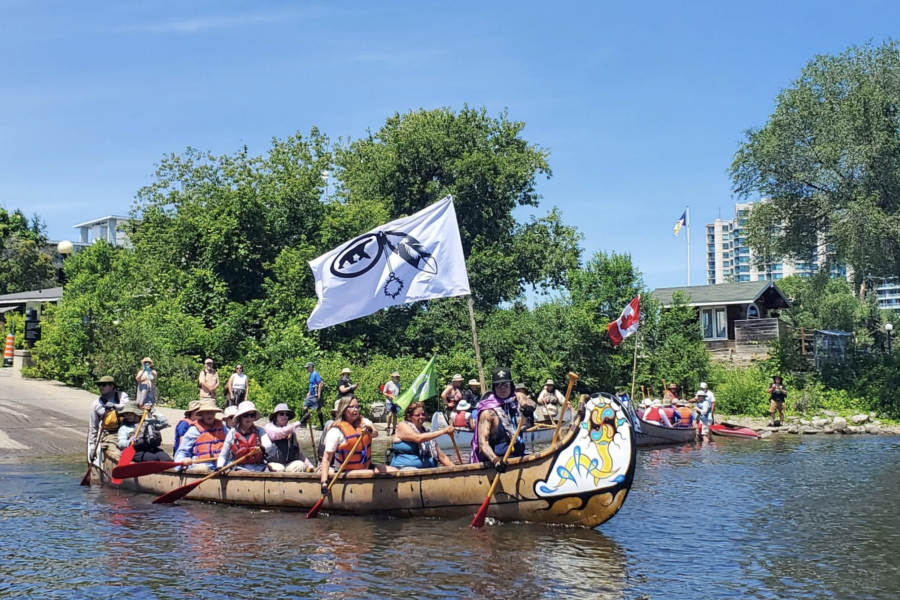
McGill uproots white pine
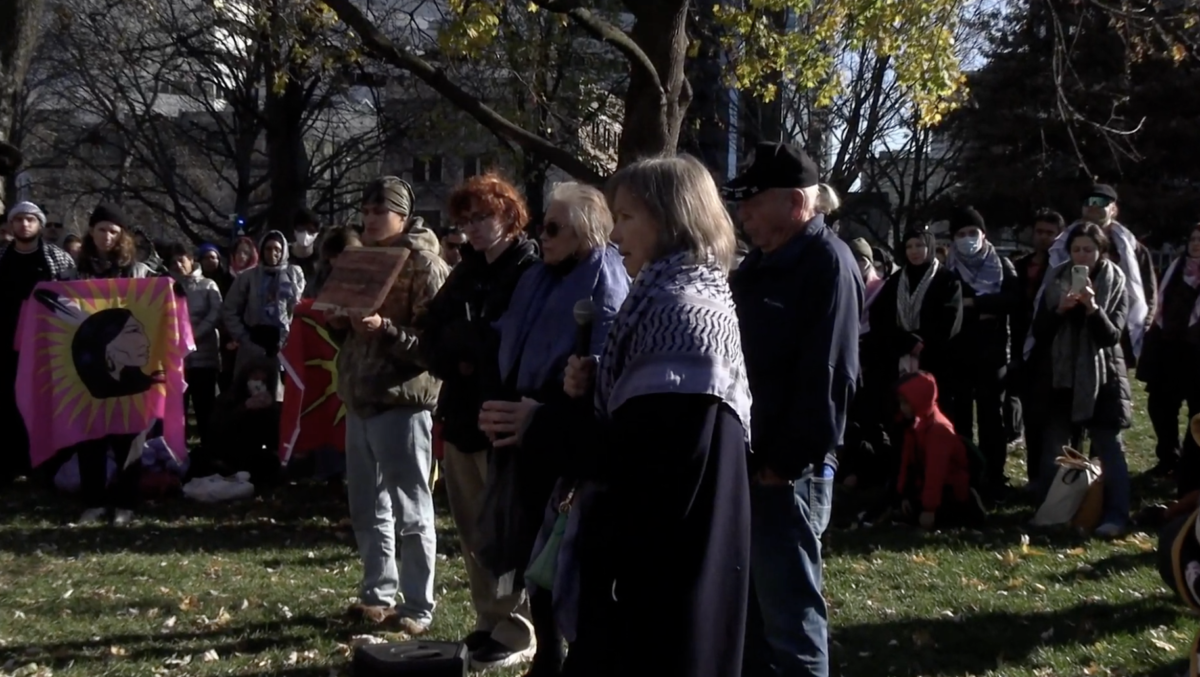
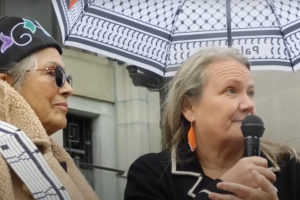
In a ceremony held on the lower field of McGill University last Sunday morning, around 200 people gathered as a great white pine sapling, brought by Kanehsata’kehró:non Katsi’tsakwas Ellen Gabriel from the Pines in Kanehsatake, was planted into the ground.
But the sapling, which organizers say was intended in part to commemorate student protestors involved in a Palestine solidarity encampment at McGill this summer, can no longer be found on the campus, after the university removed the tree less than 24 hours after it was planted.
“I feel disappointment and I feel outraged that McGill would not just stop us from planting the tree, but they would uproot it,” said Gabriel. “To me, that’s a hate crime. To me, that signifies they’re not genuine about their reconciliation.”
Gabriel was one of a group of Kanien’kehá:ka women who involved in the ceremony last weekend, the idea for which came about following the dismantling of the McGill student encampment that had been erected in protest of the killing of innocent people in Palestine, where students advocated for the university to divest from companies with financial ties to Israel.
Though two Quebec Superior Court judges rejected injunctions filed by McGill to remove the protestors, McGill hired private security firm Sirco to dismantle the site back in July.
Gabriel said that she and other Kanien’kehá:ka women wanted the sapling to stand as a “tree of peace.”
“We thought it would be a symbolic gesture for everybody. It’s peace for Palestine, it’s peace for the students, but it’s also about peace for everybody, not just Palestine,” Gabriel said.
“I could feel the respect, I could feel the gratitude that everybody there felt.”

Also at the ceremony was Kahentinetha, a member of the Mohawk Mothers, a group that has been involved in a legal battle with McGill University since 2015, as well as Karonhianóron Dallas Canady-Binette, who works as a cultural monitor for the group.
They have been battling to ensure McGill properly searches the site of the former Royal Victoria Hospital for unmarked graves.
Canady-Binette was on their way to McGill for their job overseeing that site when they heard that the tree was gone.
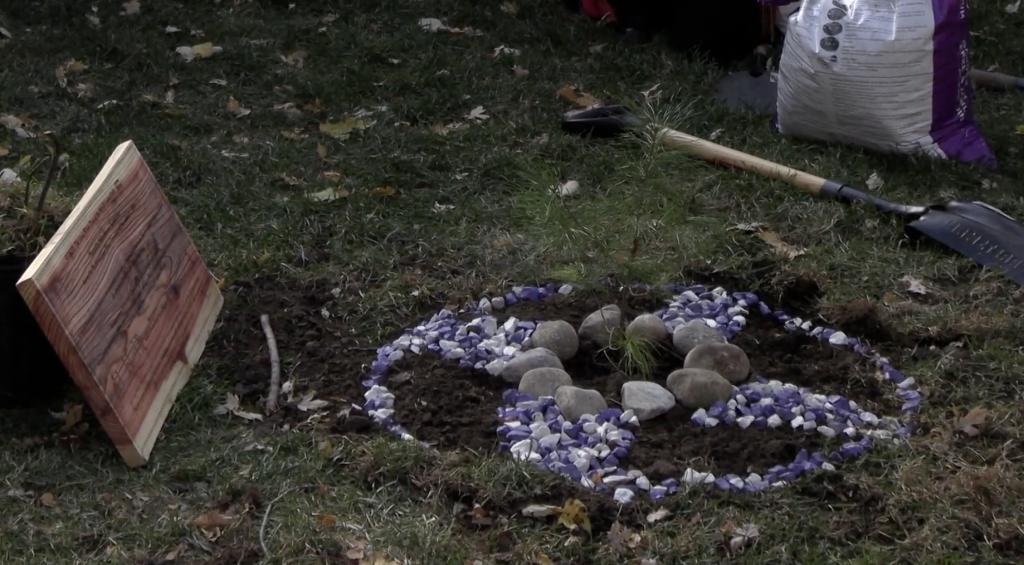
“I was angry, and I felt disrespected, it was definitely very emotional for me,” they said. “It’s retraumatizing to have something that is as beautiful and non-violent as a peace ceremony, and have McGill’s response to be violent. Uprooting the tree is a violent act.” At the ceremony, Canady-Binette read aloud a plaque that was set alongside colourful purple rocks at the base of the sapling, and speeches were made by other students as well as Gabriel and Tekarontá:ke Paul Delaronde.
The organizers of the ceremony, who communicated with McGill with the moniker “Onkwehón:we Konón:kwe” (Indigenous Women) rather than as any specifically named individual or group, had informed McGill by email and registered mail of their intentions to plant the tree on nearly two weeks before the event. The Eastern Door viewed an email correspondence between organizers and Fabrice Labeau, McGill’s vice president of administration and finance, and Christopher Manfredi, McGill’s provost and executive vice-president.

“As titleholders to the unceded homelands on which these events have transpired, we cannot stand idly by while the youth of today have their fundamental human rights and freedom of expression threatened,” reads the first correspondence from organizers.
A response from Labeau and Manfredi stated that they would not be pursuing the “proposal” of planting a white pine, adding that the university’s initiatives to foster reconciliation are “carried out in partnership and consultation with the traditional and elected leadership of local Indigenous communities.”
Organizers replied, emphasizing that “we will decide who can or cannot speak for us, and we will decide what to do on our homelands.” They also invited McGill administration to participate in the ceremony.
A further correspondence from Labeau and Manfredi informed the group that they were not authorized to go ahead with the ceremony.
Gabriel said that she is disappointed by McGill’s “empty platitudes.”
“The great white pine represents Kaianere’kó:wa (the Great Law of Peace) to us, and the notion that they would dare dig up the tree that they know was planted by us and is part of our culture as Haudenosaunee people, I think that’s disgraceful,” she said. “I think it’s an insult to all Kanien’kehá:ka people.”
McGill student Zaina Karim is part of Students for Palestine’s Honour and Resistance (SPHR) McGill, who were key organizers during the encampment, and attended the ceremony to represent student movements at the university.
“With this tree, we basically had hoped to plant the roots of a lasting peace and have a permanent monument that shows we’re not going anywhere.”
Sign up for email updates from The Eastern Door
Karim said it was disheartening to see McGill had taken the tree - student representatives had volunteered to stand guard by the tree during the campus’ opening hours, but had to leave when it closed at 11 p.m. When they returned at 8 a.m. the next day, the tree was gone.
“There’s a lot of anger and there’s a lot of grief, because this tree meant a lot for all of us,” Karim said.
“McGill has no right to say no, this isn’t their land. For them to dismiss it so disrespectfully really shows where they stand when it comes to the genocides happening in Turtle Island and in Palestine.”
McGill University declined an interview, but informed The Eastern Door via email that they did not approve the “permanent monument” for various reasons, including because McGill has “stated its intention not to adopt positions on geopolitical conflicts,” and that the field is needed for other university activities.
“The very least they could’ve done was respect us and allow that sapling to grow,” Gabriel said.
The tree is now planted in Gabriel’s garden back in Kanehsatake.