Stacey secures the Freddy
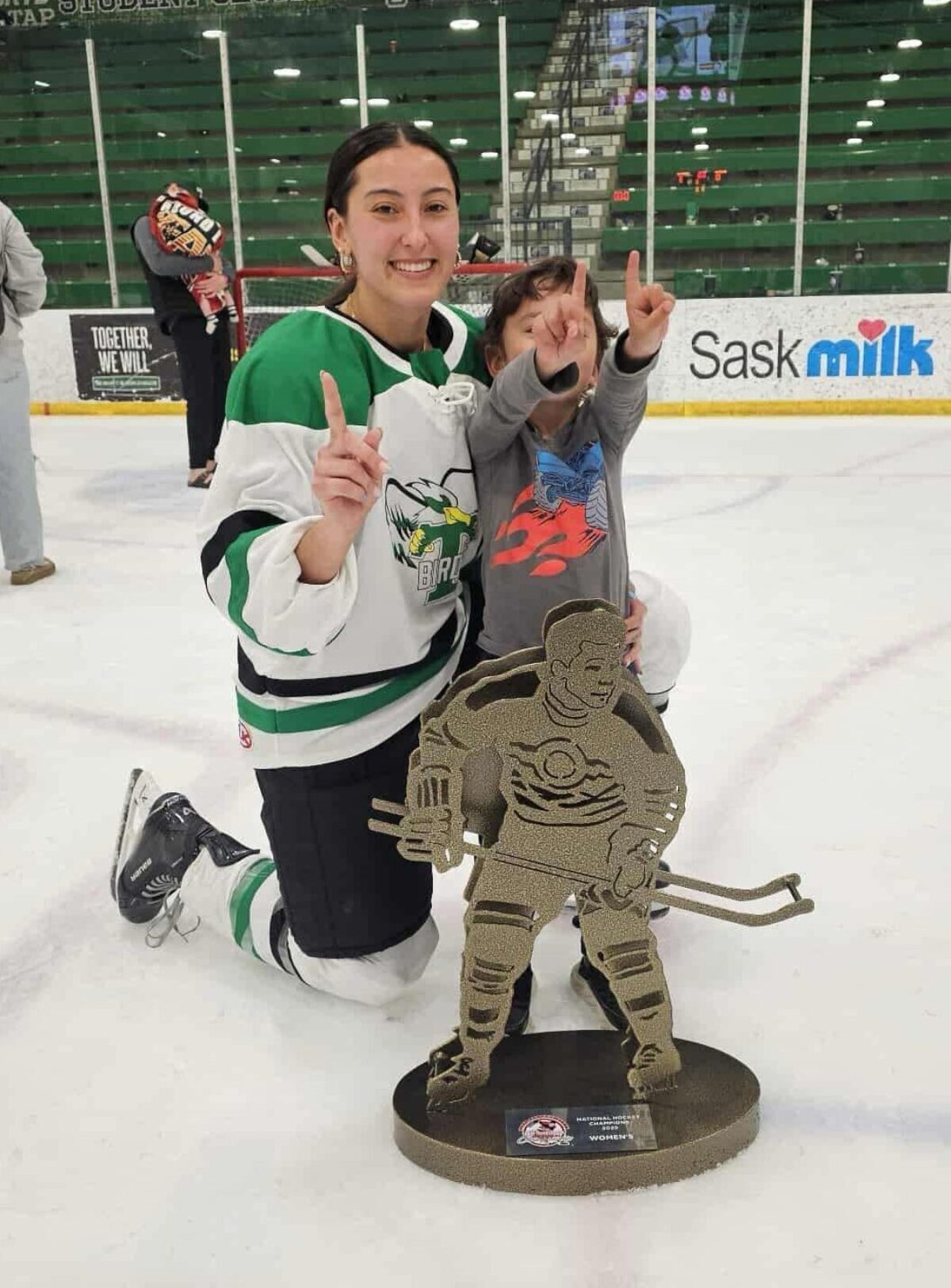
Brooke Stacey joined the Alberta Thunderbirds for the tournament and celebrated with her son on the ice after winning the Fred Sasakamoose “Chief Thunderstick” National Hockey Championship last weekend. Courtesy Brooke Stacey
Despite being retired from hockey, Kahnawa’kehró:non Brooke Stacey just can’t stay off the ice, last weekend celebrating a win with the Alberta Thunderbirds at the Fred Sasakamoose “Chief Thunderstick” National Hockey Championship in Ahtahkakoop, Saskatchewan.
“I think our team just played very well together,” said Stacey, who said that the championship is a beloved one for Indigenous hockey players across Turtle Island.
“Everyone gets so excited for this tournament, so I think winning is pretty cool,” she said.
The championship, known colloquially as “the Freddy,” is held annually in honour of former National Hockey League (NHL) player Fred Sasakamoose, who passed away from COVID-19 in 2020.
Sasakamoose, who grew up in Ahtahkakoop, played for the Chicago Blackhawks for the 1953-54 season, after learning how to skate during his time at residential school.
He shared about the traumas he faced at residential school during his subsequent years of political advocacy, including as a chief for the Ahtahkakoop Cree Nation, and was well-known for his role in promoting opportunities for Indigenous youth in sport.

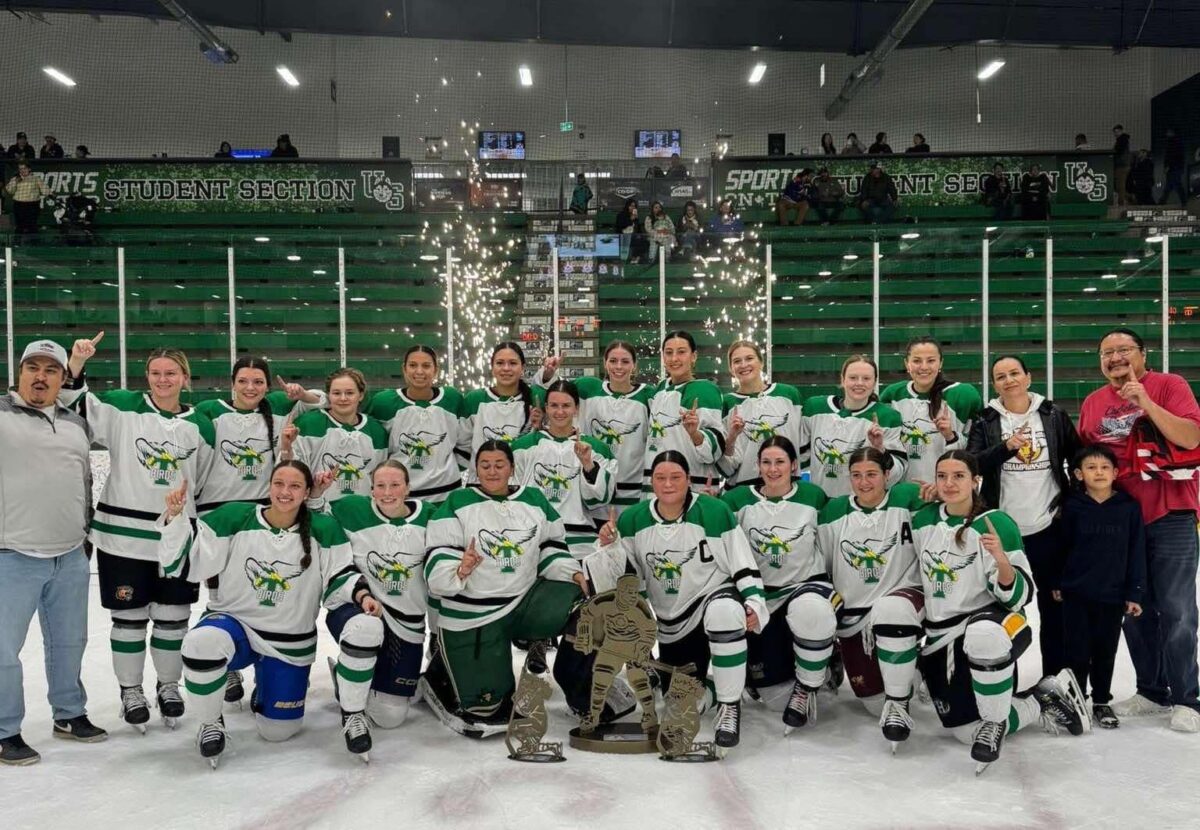
Courtesy Brooke Stacey
The championship brings together exclusively Indigenous players for fierce competition on the ice, fostering connections between athletes from different nations and continuing Sasakamoose’s legacy of excellence in sport.
Stacey had participated in the championship twice before, but this was her first time celebrating a win. She said that it felt particularly poignant to bring her young son along to the tournament, given Sasakamoose’s passion for youth in sports.
“It’s really an honour to win this, and my son came on the ice afterwards, so that was a really cool experience with him too,” she said.
Though most of the team didn’t know one another, they clicked on the ice.
“I think we had a very skilled team and everyone played well together,” said Stacey, adding that the team’s goalie, Janae Neufeld, was a particularly strong asset throughout the competition. “Sometimes it can be very difficult playing with new players, but this time it really worked out in our favour.”

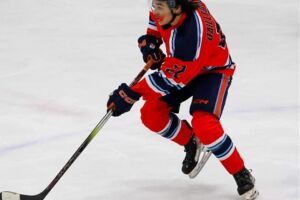
The Thunderbirds sailed to a 4-0 victory against One Nation Thunder, who were already worn down from going into double overtime during their semifinal game. That, combined with the Thunderbirds strong defence and speedy attack, made for a smooth win.
Stacey said that now that she’s officially retired, she’s been making efforts to be careful when she does play, given that she’s not following the same intense training and conditioning schedule as pro athletes might be.
“I had to try to stay in good shape for this tournament so that I could keep up with everyone, so that was the hardest part on my end, mentally preparing to not perform how I’m used to performing in the past,” she said. “That’s kind of where I am now with my retirement, trying to play, but not giving 110 per cent, because my body just can’t do it anymore. It’s a big adjustment right now.”
At certain points Stacey felt that struggle, especially when the team was shorthanded for prolonged periods thanks to penalties.
“I obviously played my hardest and did the best I could, I think I performed well, but I have to be easy on myself now,” she said.
Stacey said it’s exciting to see how much Indigenous talent there is in the hockey world, especially in women’s hockey.
Sign up for email updates from The Eastern Door
It’s only been four years that women’s teams have been playing at the championship, but with eight women’s teams playing this year, Stacey is hopeful that more women will be encouraged to continue playing - even though there’s still a long way to go, with 40 men’s teams still proving that there’s more opportunity for male players.