Demands for withdrawal of Bill 1 continue
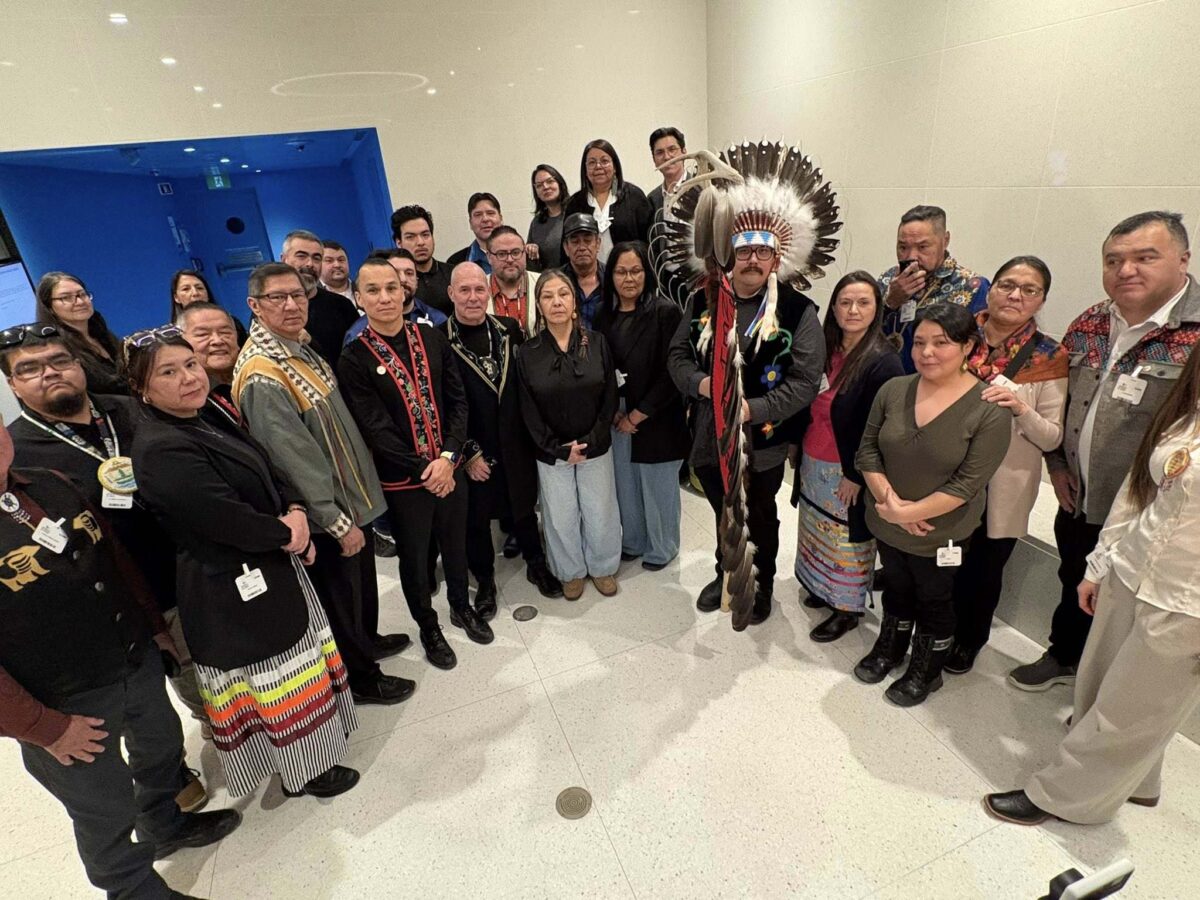
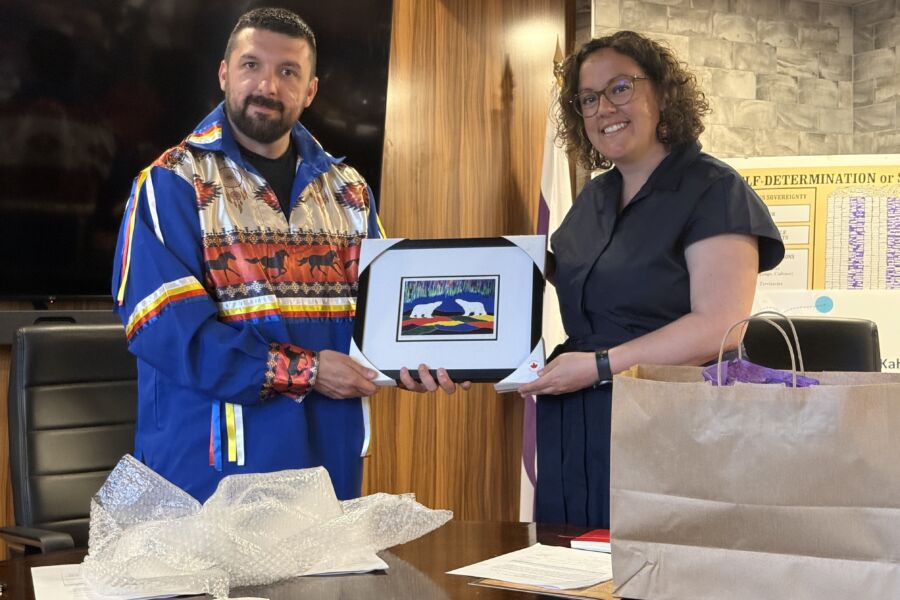
File photo. Courtesy Assembly of First Nations Quebec-Labrador
As general consultation meetings continue in regards to Bill 1, the Quebec government’s constitutional project, so too have calls for the bill to be withdrawn, particularly coming from Quebec’s First Nations, whether through the Assembly of First Nations Quebec-Labrador (AFNQL) or by individual communities such as Kahnawake.
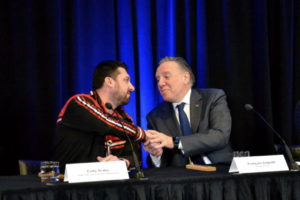
“I’m still just trying to reference the MOU (memorandum of understanding) that we signed. We’re supposed to try to find a way to peacefully coexist. This is not peacefully coexisting,” said Mohawk Council of Kahnawake (MCK) grand chief Cody Diabo.
“This is the same old, same old, that they think they’re above us and they’re going to try and stay over everybody, and that’s not what the intent was when we signed the MOU.”
What was already gearing up to be a potentially contentious meeting at the National Assembly of Quebec on February 5 between member nations of the AFNQL, the government of Quebec, and opposition parties garnered more controversy when Atikamekw Council of Manawan chief Sipi Flamand was not allowed inside the committee meeting with his eagle staff, which was viewed by National Assembly officials as going against the rules for potentially dangerous items.
“I think it just again goes to show the simple fact is, they just don’t understand, or don’t want to understand our culture,” said Diabo.
In a joint letter by Flamand and AFNQL regional chief Francis Verreault-Paul, they decried the characterization of the staff as a potentially dangerous object.
“The eagle staff holds immense spiritual and symbolic significance for our nations. Crafted exclusively from elements of nature, it embodies the special relationship between the eagle and The Creator. Its feathers and imagery therefore hold a sacred place. The eagle staff can, in this sense, be compared to a national flag: a symbol of a people, of authority, and of honour,” said the letter.
“It is deeply regrettable that the individuals responsible adopted a position based on a distorted image of reality, reducing our symbols of belonging to a ‘danger’ for the safety of the members of your assembly.”

The letter underlined that if the province is to actually treat interactions with First Nations as being nation-to-nation, they must also apply in respecting customs and traditions.
Beatrice Zacharie, a spokesperson for the National Assembly, told The Eastern Door that a meeting between the president of the Assembly Nathalie Roy and Verreault-Paul will be taking place next week.
Verreault-Paul said the point is not just to talk about it, but to make sure an incident like that never happens again.
“That would be by looking at rules or regulations that need to be changed, and changing them immediately,” said Verreault-Paul.
“I’m not able to explain why the mace in the assembly is acceptable, but this isn’t. Especially since that a mace was, at first, a medieval weapon. That makes no logical sense to me.”
When told there was a danger of “setting a precedent” by allowing Flamand in with the same, Verreault-Paul said that that was the same old excuse given.
“That’s always the response we get, sir. It’s always the same argument we hear in response. We can set precedents. This is a historic opportunity to change things together. And that is precisely why we are here today,” he said on February 5.
Despite support from some opposition parties, Flamand, and others who stayed out of the room in solidarity with him, were forced to watch proceedings via live stream.

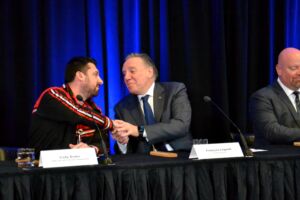
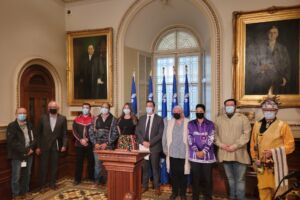
The proceedings themselves did not exactly go smoothly, either, with Simon Jolin-Barette, the Coalition Avenir Quebec Justice minister who drafted the constitution, being combative in his approach to criticism from First Nations. Verreault-Paul and others had said that the constitution was colonial in its language and that First Nations only being in the preamble, as well as the constitution stating that there was only one people in Quebec, was assimilationist.
Jolin-Barette accused First Nations critics of misrepresenting and misinterpreting the bill, and of putting words in the mouth of the Quebec government and of himself.
Verreault-Paul rejected that criticism.
“That’s the attitude of the minister last week, and it’s the same attitude that he had when he came to the assembly of chiefs; he’s coming to sell us on his bill, that we don’t understand it, our analysis isn’t correct and he’s the bearer of absolute truth. Essentially, he’s treating us as if we were ignorant,” said Verreault-Paul.
He pointed to other groups in the consultation committee in the last few days, including the Quebec Bar Association, that decried the bill.
“The minister and his team aren’t the only constitutional lawyers out there,” he said.
Diabo called the constitution project “paternalistic” during the meeting, and said that it should be redrafted, without First Nations being included.
In a previous meeting with Jolin-Barrette, Diabo said that the exclusion of First Nations was a big sticking point for the provincial minister.
Sign up for email updates from The Eastern Door
“When we had our meetings, he only kept saying, ‘well, what if I want to do a public safety bill? How does that apply to you?’ He doesn’t understand that we’re separate, that we’re not his people,” said Diabo.
“He has to reconcile that internally, in his own mind. But I just don’t think he has the capability of doing so.”
Both Diabo and Verreault-Paul saw the proceedings and Jolin-Barrette’s approach as a symptom of a government that knows it will soon lose power and trying to pass as many bills as possible before an election almost assuredly displaces them later this year.
“The minister made it pretty clear, and he even said that he wants to pass this before the leadership race,” said Verreault-Paul.
“Their intentions are pretty clear: they want to pass this bill ASAP. And that’s very worrying.”
Jolin-Barrette did not reply to a request for comment to Quebec’s Justice ministry.