Bylaw barrier for Indigenous guides
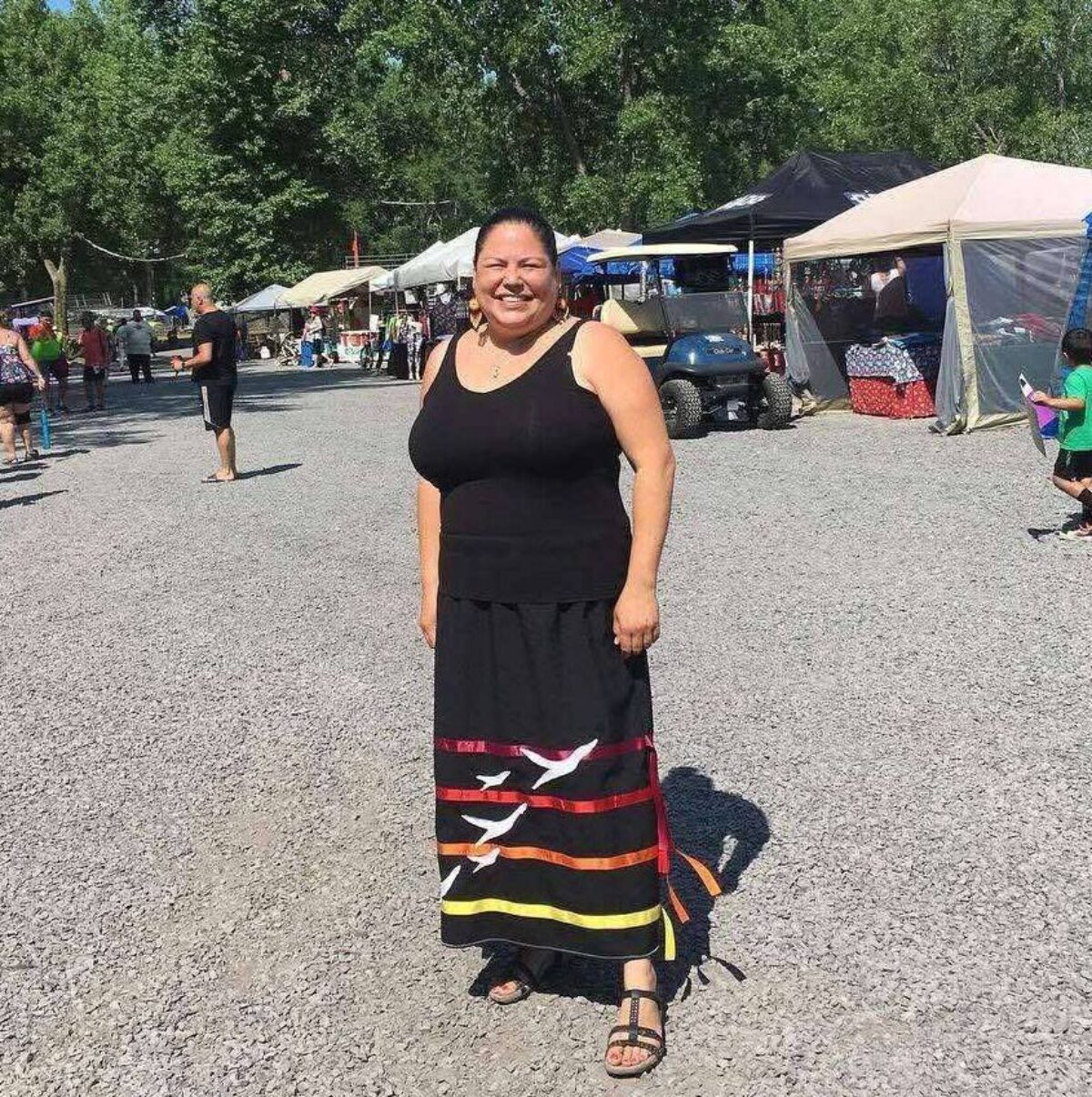
Sophie-Claude Miller is Cree and lives in Montreal. She has a wealth of knowledge to share with tourists - if only she could break down the barriers she faces to sharing it. Courtesy Sophie-Claude Miller
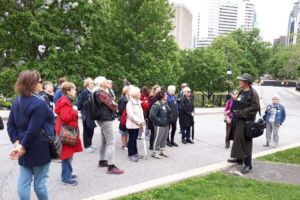
Montreal-based tour guide Donovan King is done waiting for the government to address his concerns that laws regulating tour guiding in the city impose undue barriers on Indigenous people.
“There’s only so many times that you can hit your head on the wall until you either climb over it, or you knock it down,” King said. “It’s time to move forward. There’s no choice at this stage.”
King, who is non-Indigenous, has been working as a tour guide in the city since the early 2000s, sharing the history of the city with groups from near and far. It wasn’t until 2016 that he first heard about the need to obtain a license to give tours in the city, when he was approached by an irate tour guide at the Notre-Dame Basilica in Montreal’s Old Port while giving a tour to some of his students. She told him what he was doing required a permit.
“I researched it, and when I found out she was correct, I was shocked that it’s illegal for a history teacher to take their students on a tour,” he said.
The law King refers to is bylaw G-2, which prohibits people from leading tours in Montreal unless they have the Attestation d’études collégiales (AEC) guide touristique de Montréal licence which can only be obtained from the Institut de tourisme et d’hotellerie du Quebec (ITHQ).
While King isn’t opposed to some form of regulations within the tour guiding industry, he believes that requiring individuals to take the ITHQ course is inequitable, resulting in additional, and often insurmountable hurdles for tour guides who might otherwise have valuable knowledge to share with tour guides.
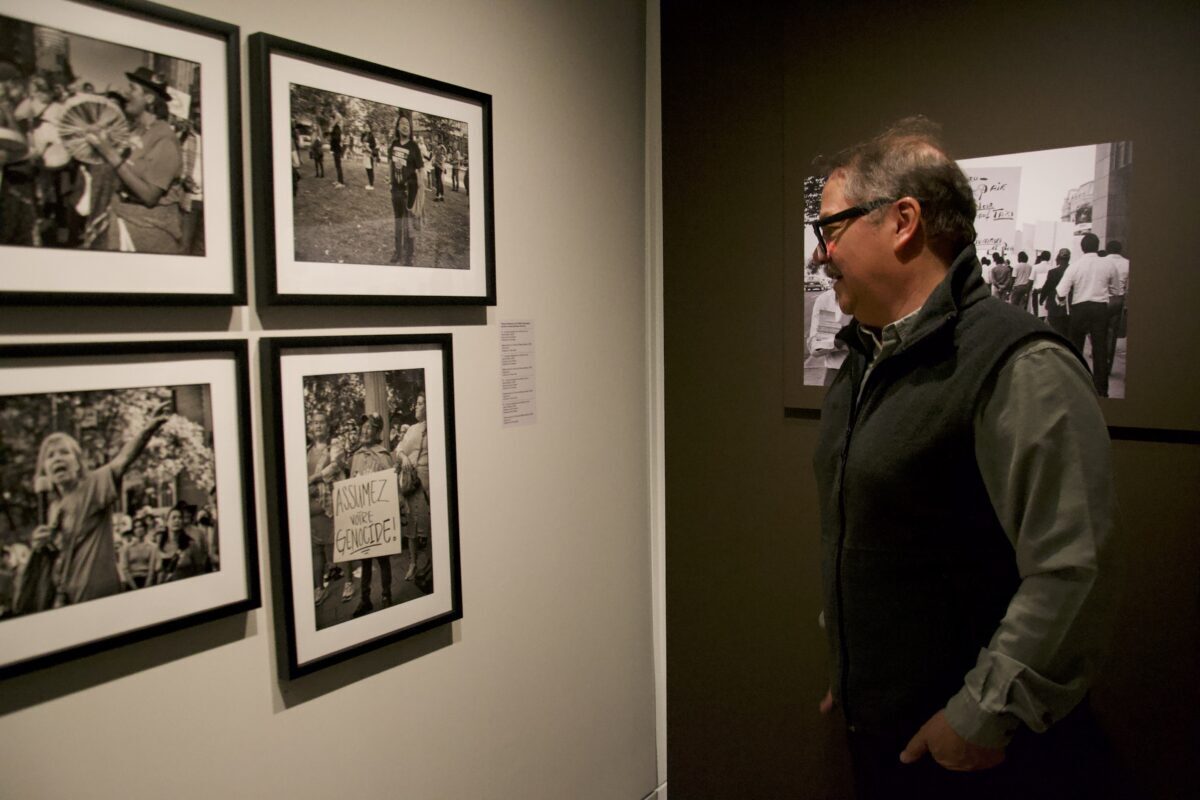
Martin Akwiranoron Loft at the opening night for “Pounding the Pavement,” a street photography exhibit in Montreal that included nine of his works. He’d love to take people on a tour of his favourite photography spots in the city, but bylaw G-2 stands in his way. File photo
To start, the ITHQ course is costly. At $2,743 plus a $35 registration fee, committing to taking the course means committing to taking on a financial burden that many promising tour guides might not be able to weather.
Additionally, since ITHQ is a French-language institution, the courses are taught in French, meaning that if students can’t fluently speak the language, they’ll be unable to comprehend the course content.
It’s also a huge time commitment, lasting seven months and spread over two terms for a total of 240 in-person teaching hours.
If an individual can’t make that work, be that for financial, linguistic, or time-related reasons, there are no other options to become an accredited tour guide in Montreal.

In King’s eyes, those are barriers that will be felt especially hard by Indigenous people, who he believes should be entitled to give tours about their territory in the language they choose.
“They need to start respecting the reconciliation process, and right now, they’re not doing that,” he said.
Right now, budding local tour guides can find a home at Kahnawake Tourism, where no such requirements are in place to lead tours of the community. But some are still irked to know that tour guiding in the city isn’t even an option they could consider in future.
Martin Akwiranoron Loft is well-known for his documentary-style photography, often capturing unique moments in black-and-white in Kahnawake, Montreal, and beyond. Recently, he was inspired by a fellow photographer he saw on social media, who led locals on “photo walk” tours in various cities. He briefly considered organizing the same kind of event in the city, gathering strangers to meet up and tour Montreal, photographing the interesting subjects they might see along the way.
But, he realized, what he wants to do could be illegal under bylaw G-2. According to a spokesperson for the City of Montreal, the bylaw defines a “tourist visit” as “a guided tour of historic sites, buildings and monuments, picturesque places, or places of a cultural nature in the city.”
Since Loft would be doing exactly that, his idea for a picture walk would therefore be technically illegal.
“It’s an injustice,” said Loft, who said that he doesn’t have any plans to take the ITHQ course and pursue his idea knowing the hurdles he’d have to jump through.
He said he expects that most in Kahnawake would be unlikely to take the course, knowing the financial and linguistic barriers they’d have to overcome. That leaves tourists missing a key part of the city’s history, he said.
“I think it’s a deeper and richer experience when this information is coming from someone from the community,” he said. “For our people, I don’t think that there should be a prerequisite to do these things.”
Though the ITHQ does not have a specific unit on Indigenous history in Montreal, comments sent via email to The Eastern Door and attributed to the ITHQ outlined elements of Indigenous history are integrated throughout the course, including detailed information about Kahnawake and Kanesatake.
The curriculum also includes tracing “the history of Montreal from prehistoric times,” and students attend multiple museum trips, including to the McCord Museum where they learn from the permanent exhibition “Indigenous Voices of Today: Knowledge, Trauma, Resilience.”


“In designing his course, the teacher aimed to present a balanced perspective that includes the voices of Francophones, Anglophones, and the various Indigenous nations involved - each with their own culture, way of life, and interests,” said the ITHQ.
The ITHQ noted that the current curriculum has attempted to include a wide variety of sources, including works by Indigenous authors, but that they haven’t completed consultation with communities.
“While there has not yet been direct consultation with Indigenous community representatives in developing the course, we would be open to any suggestions that could enhance this part of the curriculum,” the ITHQ stated.
One prospective Indigenous tour guide already has a suggestion: more frequent course offerings. Sophie-Claude Miller is from the Cree Nation of Waswanipi and loves to be involved in community life in Montreal, earning the nickname “Miss Activity” from her friends due to her immense knowledge of things to do in the city.
She herself has frequented many themed tours in Montreal and decided that her lived experience as an Indigenous person living in an urban hub would be a meaningful voice to add to the tourism scene. But when she decided to apply, she was disappointed to find that the program is only offered once every two years.
The ITHQ confirmed that the program was not offered for the 2024-25 academic year, but that admissions will open for the 2025-26 cohort on June 2.
Miller said that it’s disheartening to know that the only establishment that can offer accreditation operates on such a limited schedule, another barrier to her pursuing tour guiding.
“I just want to be able to work and present my own perspective and reality, and the historic facts that are relevant to me and my existence,” Miller said. “I’ve witnessed other tour guides and seen them talk about colonial stuff, and they don’t talk about our reality, because they don’t have that education and that experience, and that comes through lived experience, really.”
Despite only being offered every two years, a spokesperson for the City of Montreal confirmed that all prospective tour guides must complete the course at the ITHQ. They stated that there continues to be discussions concerning bylaw G-2 – discussions that seem to have been ongoing for many years with little movement – and they did not confirm an expected timeline for potential changes to the bylaw in the future.
Though these barriers have been discouraging for aspiring Indigenous tour guides, Kahnawake Tourism’s Kimberly Cross said she’s hopeful that changes could come in the future. She said that Kahnawake Tourism has been actively connecting with entities like Montreal Tourism, who have been open-minded about finding avenues to better include Indigenous people and narratives within the tourism industry.
“We’re working on educating people who are in those fields to make those changes and do it respectfully,” Cross said.
Sign up for email updates from The Eastern Door
“I’ve been getting into those circles and talking to people and putting it in their ears.”
She said that right now, Kahnawake Tourism has its own difficulties ensuring it has enough tour guides for tours in town, particularly French-speaking tour guides, but one day they’d love to expand their work, potentially giving tours that start in the city and lead to Kahnawake. If that ever happened, the bylaw could lead to issues.
“That would pose a challenge that we might not be able to do it with our tour guides if they don’t have the accreditation,” Cross said.
King said that he’s ready to try a new approach, having grown sick and tired of waiting for change.
He’s been developing plans with some willing Indigenous tour guides to start tours in the city without those guides completing the ITHQ course. Though he knows that would be technically in violation of the bylaw, he said action needs to be taken to demonstrate just how unfair the law is, adding that the definition of a “tour” within the bylaw is already so broad that it makes it difficult to see how the city could enforce it.
“If they were to start fining people, how would they choose who to fine?” King said.
“There’s no movement happening here, so I’ve decided I’m going to go ahead and hire Indigenous guides, and if they’re not going to budge, I’m going to break this wall. If they’re going to fine me, I’ll pay it, and I’ll take it right to court.”