New book educates on reality of sex trafficking

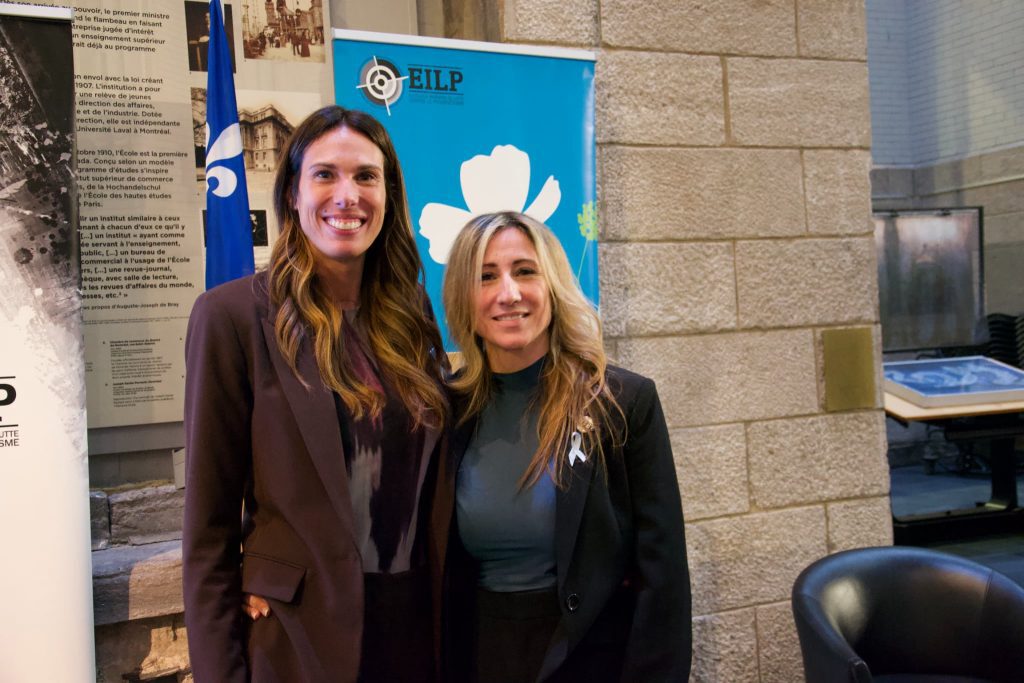
Sex trafficking happens in every community. That’s the message behind Caught in my Dreamcatcher, a new book written by two Montreal police officers.
“It hits in the best of families. It hits no matter where we come from. It’s a crime of opportunity,” said Josée Mensales, who co-wrote the book alongside her colleague Romy Verge-Boudreau.
The two also work for the Surete du Québec (SQ) unit dedicated to arresting those who profit off the sale of others, touring communities all over the province prior its publication last week.
Miriam Lafontaine The Eastern Door
It largely consists of the testimonies of survivors, edited and collected by the two police officers that worked directly with them to help them navigate the justice system. One comes from a woman from an unnamed reserve in the province. One Inuk woman, from a community in Nunavik, also shares her experience. In between are chapters dedicated to educating readers about the resources that exist to support victims of sexual violence.
Though it’s known Indigenous women, girls, and boys are overrepresented in the sex trade, they’re underrepresented in police investigations in the province. So much so that it’s hard to track which communities have it worse than others, Mensales and Verge-Boudreau told The Eastern Door, as it’s a crime not often reported to authorities.
“Very little of our police statistics concern people that come from First Nations or Inuit communities, but we know that more than 50 percent of the people being trafficked in Canada come from Indigenous communities,” Mensales said.

Both are now working on getting the book distributed to First Nations and Inuit communities across the province, through their work with the Programme Les Survivantes that they head. It provides educational workshops all over Quebec to raise awareness about the signs of human trafficking, often with survivors in attendance there to share their stories.
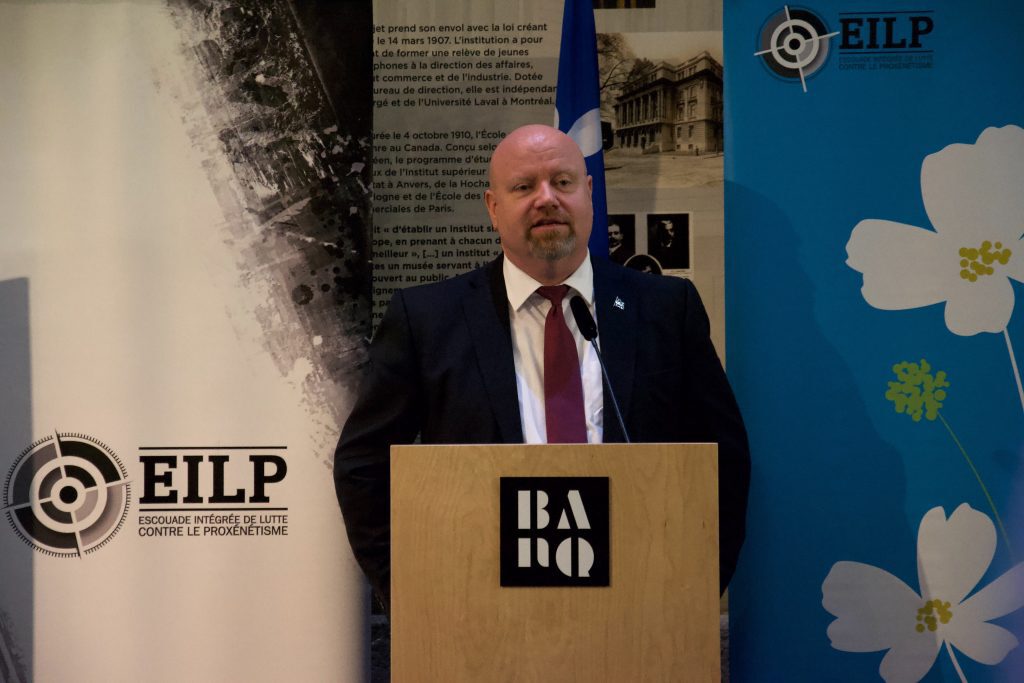
“At the beginning, they feel that they’re doing that with their consent. They believe that they’re doing it as a joint venture,” Indigenous affairs minister Ian Lafrenière told The Eastern Door, while at the launch for the book in downtown Montreal last Thursday. “That’s why it’s so hard for people to realize that they’re victims, because at the beginning, they believe they’ve fallen in love with someone. This is a joint project.”
Miriam Lafontaine The Eastern Door
The former officer and spokesperson for the Montreal police wrote the book’s preface, something he was inspired to do after chairing a National Assembly committee dedicated to investigating the sexual exploitation of minors in the province over 2019 and 2020.
Ellen Filippelli, president of Kanesatake Health Center’s board of directors, said it’s an unfortunate reality in her community.
She previously headed a crime prevention program run under the Mohawk Council of Kanesatake (MCK), which collaborated with Mensales from 2014 onward to raise awareness about how sex trafficking operates. She said she was pushed to take action after hearing stories about their children getting targeted.
“I had heard of our youth who were going out to Montreal,” said Filippelli, also the executive director of the First Peoples Justice Centre of Tiohtià:ke. “They were attending the Grand Prix races, and then we had two young girls who got really wrapped up in that scene, and they were trafficked.”


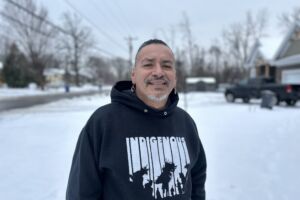

For years, she helped organize educational workshops in town that targeted youth from the ages of eight to 17. Similar workshops were also organized for parents and frontline workers, like first responders, and those who work in schools, hospitals, and social services.
“It was about making our youth more aware of their surroundings and the realities of what can happen if they took that path,” she said. “People were starting to talk more about it, and that’s the important thing.”
That crime prevention program doesn’t exist anymore though, she said, ever since it shuttered over the pandemic.
“It was closed down, and it was never reopened. And that should never have happened. We would not be in the state that we are in right now, and criminals take advantage of that,” Filippelli said.
Services to prevent and provide support to victims of this kind of crime are lacking in town, she said, and the territory is under-policed by the SQ. The growing cannabis industry brings in more and more outsiders each year, creating a perfect storm for vulnerable people to be taken advantage of, she said.
“It could be men or women who befriend them, and then they bring them off to the city. They’ll bring them off to another place. And then you don’t hear from them again,” Filippelli said.
The Eastern Door requested statistics on the number of police investigations launched by the SQ this year and last year into sex trafficking and pimping, specifically requesting the number that involved Kanehsata’kehró:non as victims, but weren’t able to obtain any. A spokesperson for the provincial police service said because of how their database is set up, the numbers were difficult to extract.
The same statistics were sought from the Kahnawake Peacekeepers, which reported it didn’t have any police files relating to sex trafficking or the sale of sex since the beginning of this year or last year.
There was one incident that involved a non-local approaching a minor and offering her a ride, said Kyle Zachary, their spokesperson. An investigation resulted in the laying of criminal harassment charges, but whether that could have been a human trafficker isn’t clear cut, he said.
Sign up for email updates from The Eastern Door
Rebecca D’Amico works in prevention at Kahnawake Shakotiia’takehnhas Community Services (KSCS) and is an active member of the community’s Family Violence Action Group, which meets weekly. She said if sex trafficking is happening, it isn’t something that’s come up at the table.
It’s not something she hears about through her role at KSCS either, she said.
“We don’t get the calls where someone says, ‘I think I’m being trafficked, or I think my family member is being trafficked.’ I just don’t even know if people really understand it that way,” D’Amico said.
Last year, KSCS helped to host two separate workshops in town on the topic, with one aimed at parents and another aimed at frontline workers like first responders. Workers from KSCS also visit classrooms to educate students about the risks associated with social media.
“It’s more online, it’s more exploitation. And you know, a lot of people who are being trafficked even live at home and their parents don’t know,” she said.
“Really, that’s what we can do right now,” she said. “I don’t know what the rates are in Kahnawake for trafficking. It’s still something that people are really trying to learn and understand, and maybe some don’t even know if they’re being trafficked.”
Caught in my Dreamcatcher is currently being sold at Renaud Bray. Both print and e-book versions of the book can also be purchased directly from the website of its publisher, Éditions Hannenorak.
Plans are also underway to produce an Inuktitut translation of the book as well, the authors shared.