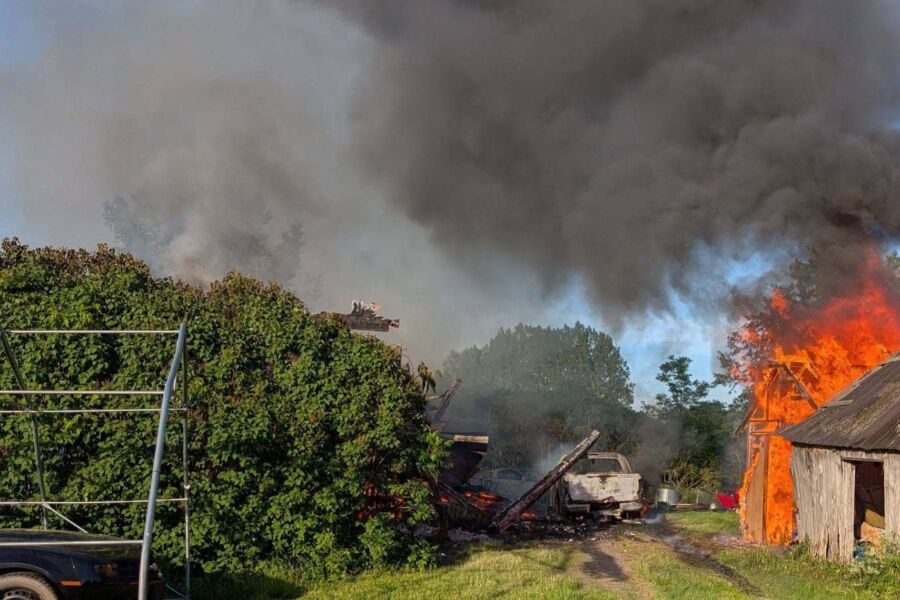
Asbestos concerns at Kanawaki

Workers at the Kanawaki Golf Club say they’re worried about their health after having to handle old cement pipes laced with asbestos. They say that management has failed to properly dispose of the hazardous material - pipes underground that date back from a water irrigation system that’s not been in use for decades.
Soil containing segments of the broken-up pipes was also dug up, moved and reburied in at least three areas of the golf course grounds, employees told The Eastern Door.
The workers came into contact with the pipes during work involving digging that began in the summer to add a new drainage system and pond on the property. Up until this October, they were instructed by management to dispose of the dirt from the work in large piles, which were gradually covered with new soil.
The employees spoke on the condition of anonymity, saying they didn’t want their names in the press out of fear they could be fired.
“As a community member, I don’t want to have Kanawaki ruining the environment. They’re only renting the land,” one worker told The Eastern Door. “You can’t be having asbestos buried all over the place.”
A meeting is now expected to be held soon between management at Kanawaki and Indigenous Services Canada (ISC), which leases the land to the golf course, after Kahnawake’s environment office became aware of the situation in October and wrote to the federal government.
“We are concerned,” said Patrick Ragaz, general manager of the Kahnawake Environment Protection Office (KEPO). “This was new information for us. We weren’t aware that the irrigation system was there and that it contained asbestos.”

In Kahnawake, materials containing asbestos, a hazardous material known for causing mesothelioma, are meant to be disposed of according to safety protocols set by KEPO.
That process includes setting aside these kinds of items whenever they’re discovered, sealing them in plastic bags designed for storing hazardous materials, and then hiring a company specialized in handling asbestos properly dispose of them. As well, only those with specialized training are meant to handle the material.
This procedure was only followed after October, according to workers, when a crew from KEPO arrived and were shown some of the cement pipes by workers at the golf course. The environmental office had been there then to carry out routine groundwater testing.
Management at the golf course maintain they’ve only been aware of the existence of the asbestos laced pipes since then, after speaking with the crew from KEPO.
“That’s when they brought it to our attention,” said general manager Steven Pert, who’s worked at the golf course for the last 13 years. “I was not aware of what was in the ground and what the material and the components of the materials were.”
Sean Horne, the golf course’s superintendent, said similarly.
Workers The Eastern Door spoke to tell a different story, however, saying many longtime employees there - including former management - have long known there’s a former water irrigation system on the grounds made out of cement containing asbestos.
A former employee that held a leadership role at the golf course confirmed this, saying segments of the former irrigation system were routinely found over the years whenever work requiring digging was carried out. They were always disposed of appropriately, he said, through the hiring of specialized disposal companies, while he worked there.
He also asked that his name be withheld in this article.
These types of pipes were commonly used in Canada over the 1940s and 60s to supply drinking water, but they increasingly fell out of use after health risks associated with asbestos became known. The golf course just off Route 207 has been there since 1914.





“The course is 110 years old, so we’re not aware of every material that was used there in the past,” Pert said. “When this was brought to our attention that these were materials that are unsafe, we acted accordingly, and very swiftly, to maintain the highest standards of safety for our staff and our members.”
Pert and Horne also said soil containing pieces of the cement pipes were never moved and buried over with new soil.
“We handled it, and we sealed them. There were no pipes that we buried afterwards. There was no crushing of any sort,” said Horne, who’s worked at the golf course for the last two years now. “These pieces that were dug up were put aside, bagged, and sealed to be disposed of properly.”
By October or early November, they also said that all the pieces of cement pipe that had been bagged and set aside had since been hauled away by a specialized disposal company that they hired.
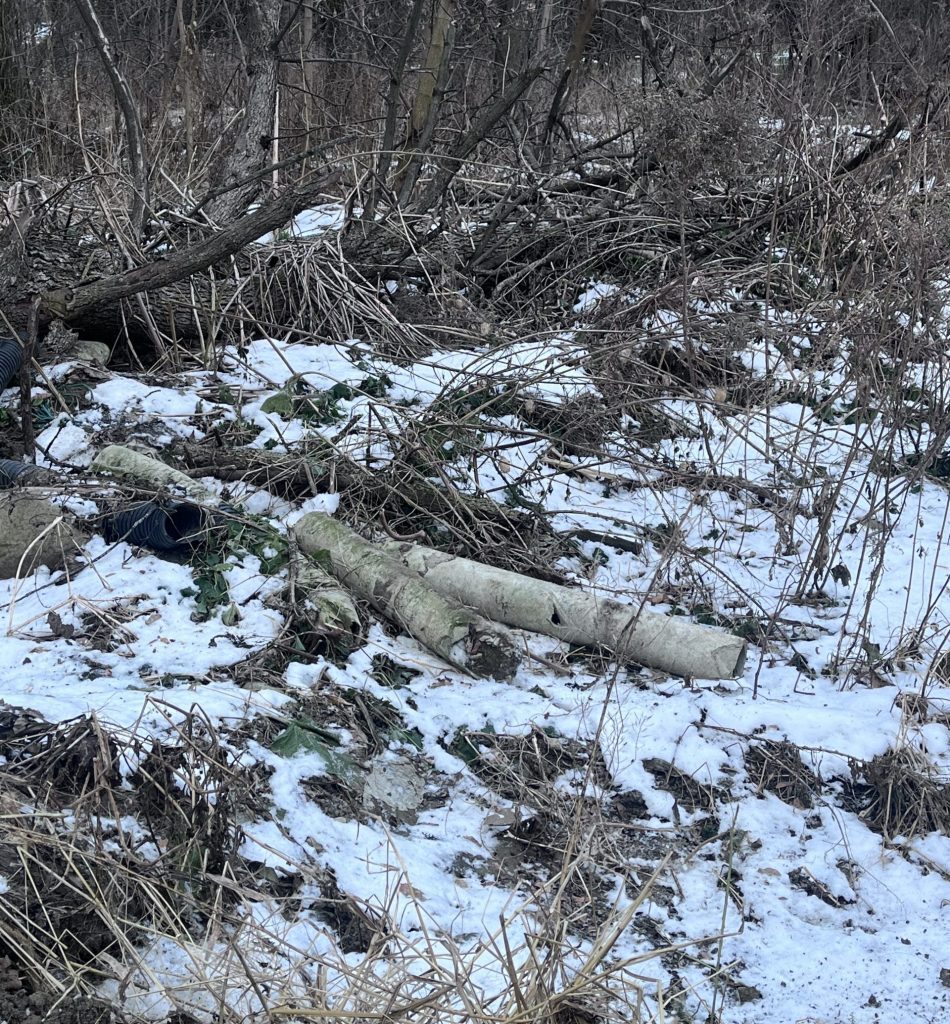
But even after then, many segments were still visible in multiple areas, with large pieces of cement pipes lying on the grass. The Eastern Door was sent numerous photos of the pipes - including two that were taken in December.
“The old superintendents would dispose of the pipes before putting any soil,” one worker said. “You shouldn’t be spreading these pipes all over the place, landfilling in different parts of the golf course.”
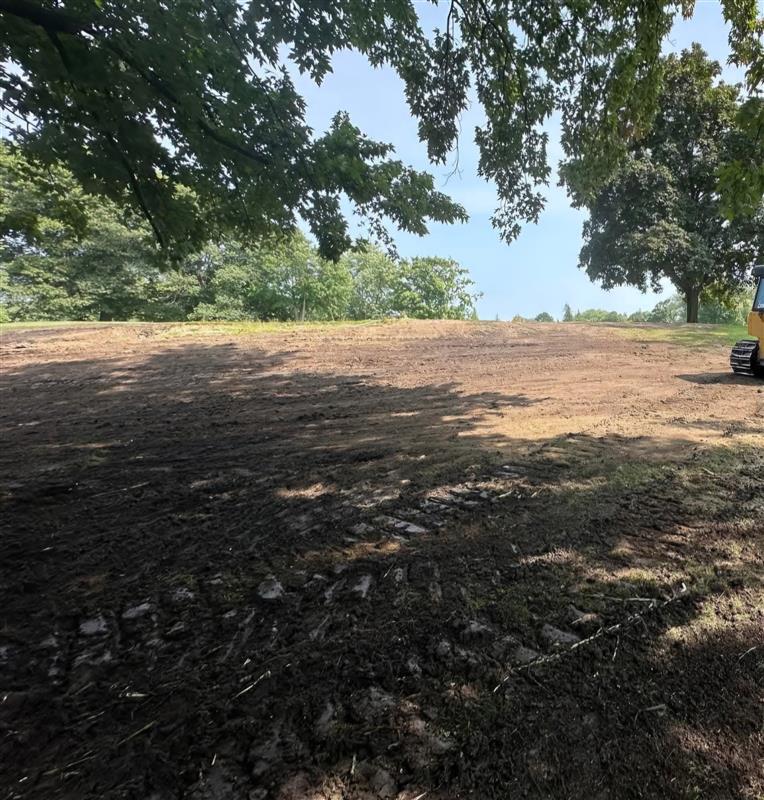
The areas where soil containing asbestos cement pipes were laid and buried over are located near fairways two, 13, and 18, the workers said. A creek runs nearby fairway 13. A bulldozer was also used to flatten the earth at two of those locations back in August, they said.
Sign up for email updates from The Eastern Door

“I think some were run over by a four-wheeler, which would have crushed them,” said one worker, who said he didn’t know he was dealing with hazardous materials until after he spoke to workers from KEPO.
“When I was working around it, it was dusty when I was driving around,” he said. “They said, ‘If it cracks, it could go into the air and I could breathe it in.’”
Regaz from the environment protection office said only those with the appropriate training should be dealing with items that contain asbestos.
“The labour office here has told the workers to stop working with those pipes and to stop those activities until all these conversations can be had,” he said, mentioning the meeting expected to be held soon with federal officials.
In a written statement, ISC shared it’s committed to hosting a meeting with golf course management, the environment protection office, and band council before the end of this month.