Wahta Mohawks re-join Iroquois Caucus
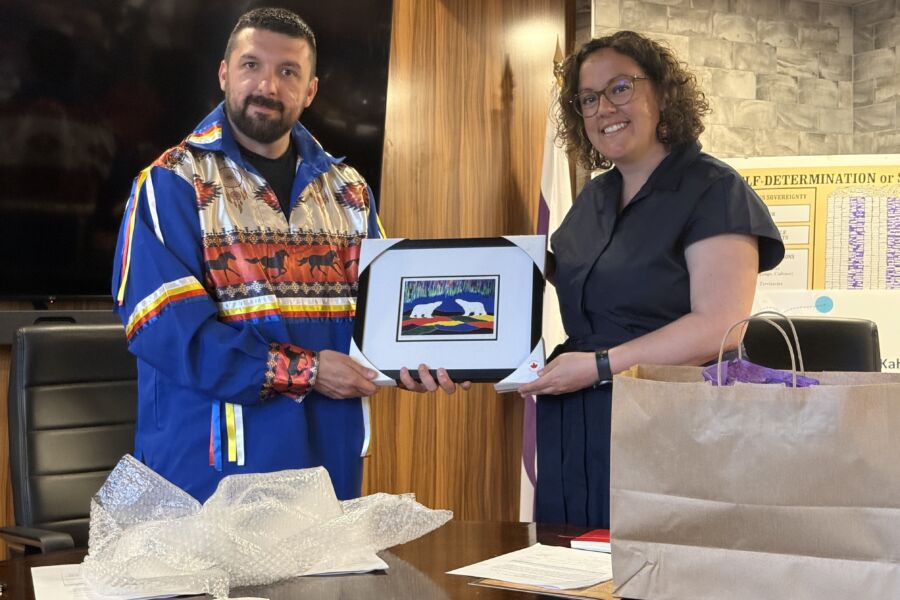
Courtesy Wahta Mohawks Website
The Wahta Mohawks have officially rejoined the Iroquois Caucus, marking a move to bring together Haudenosaunee communities and further joint advocacy efforts at government tables.
“We feel that we’re stronger as a bundle of sticks than a single one,” said Philip Franks, chief of the Wahta Mohawks Council.
The Wahta Mohawks had previously been a part of the Caucus, but left the organization around nine years ago, according to Franks.
Franks said his Council felt that it would be beneficial to rejoin the Caucus in an effort to have more direct advocacy and communication with leadership tables in the federal government.

He said that it can often be hard to make movement with the government because of the small size of his community, which is located in Muskoka, Ontario. He said that under 200 people live in the territory, and the membership list consists of just over 800 people.
It makes sense to join forces with other Haudenosaunee communities, he said, because Wahta has long-standing ties to the other member nations. Most people in Wahta territory are originally from Kanesatake and were moved to Ontario in the late 1800s.
“To us, it’s an advantage to be able to be involved in the Iroquois Caucus to ensure that our voices get heard,” Franks said. “It was an easy decision. We went off the path there for a few years, but I think our community is pleased that we’re reunited.”
Mohawk Council of Kahnawake (MCK) grand chief Cody Diabo said that the decision was made by the Caucus following a meeting with Wahta’s leadership in early May.



“All the Haudenosaunee communities are all back together to push our common interests, our common issues, and we’re much stronger together than we are separately,” Diabo said. “It definitely helps when we’re all united to push on external governments.”
He said that at the time of the Wahta community’s departure, there had been a feeling that there was little movement on political issues within the Caucus, and that it wasn’t enough structure for making progress.
Diabo hopes that going forward, the Caucus will be a productive space for all member communities, given the recent hiring of employees to ensure structured meetings, and the positive building of relationships with federal ministers.
“We’re getting ministers to meetings and giving a voice to our smaller sister communities, and that definitely helps them get more exposure in that area,” Diabo said. “I think they’re really seeing the benefits of being all together at these meetings.”
Sign up for email updates from The Eastern Door
The Caucus is now made up of seven communities: Kahnawake, Kanesatake, Akwesasne, Tyendinaga, Six Nations of the Grand River, Oneida of the Thames, and the Wahta Mohawks.