Trio of awards for Gabriel book
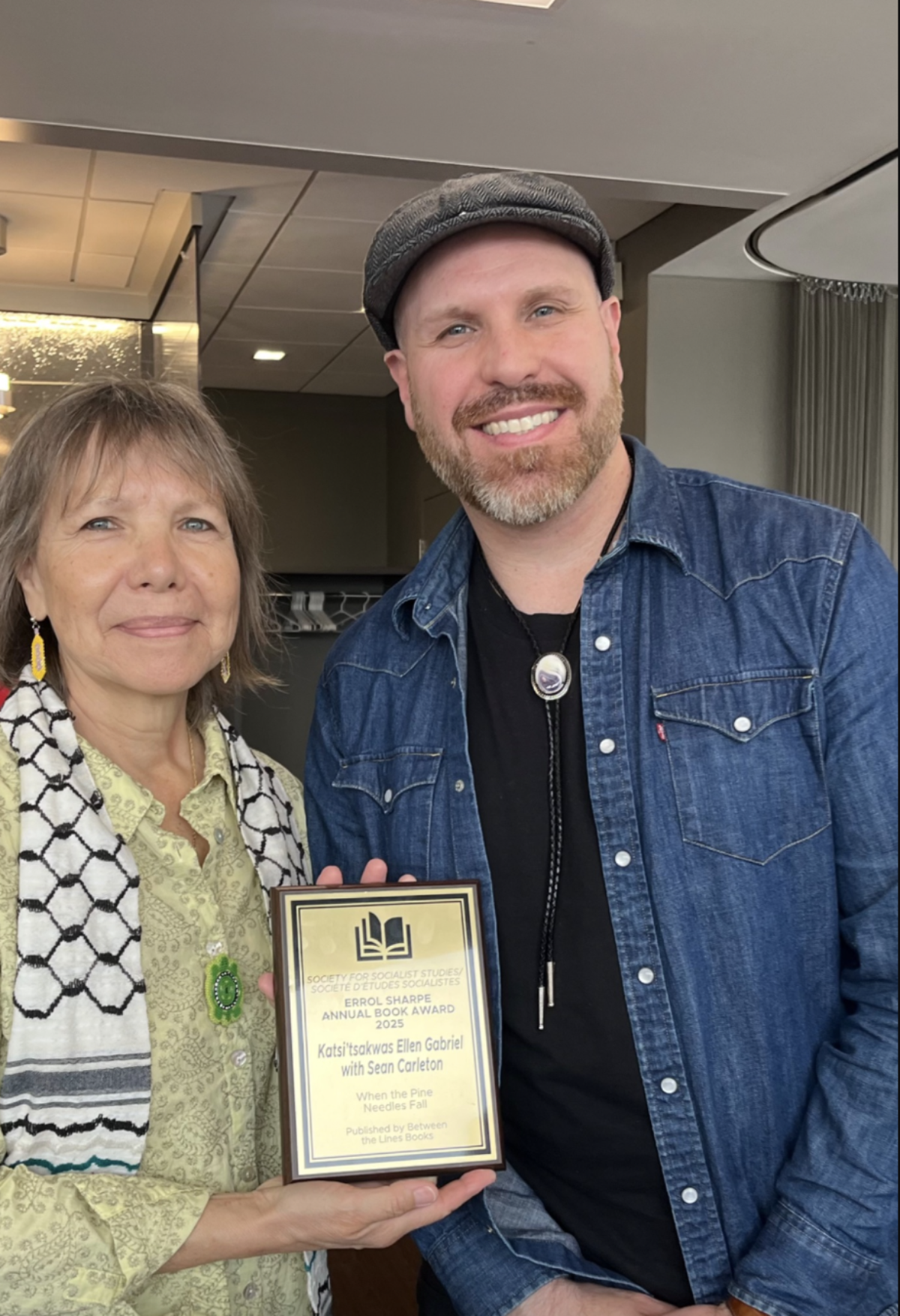
Katsi’tsakwas Ellen Gabriel and Sean Carleton with the Errol Sharpe Annual Book Award, one of three prestigious awards they accepted in one day for their book When The Pine Needles Fall. Courtesy Sean Carleton
One award is impressive, but a hat-trick of awards in one evening is something to be proud of.
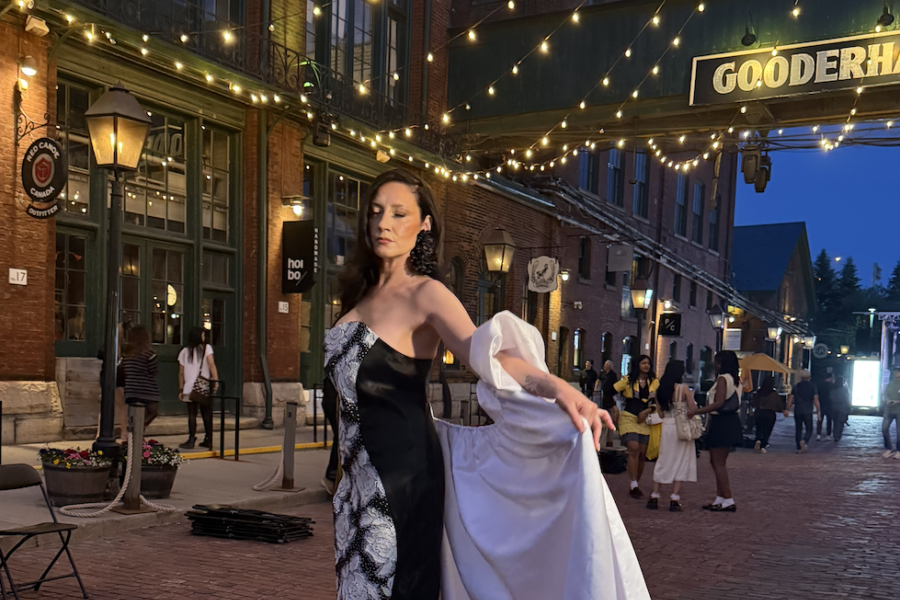
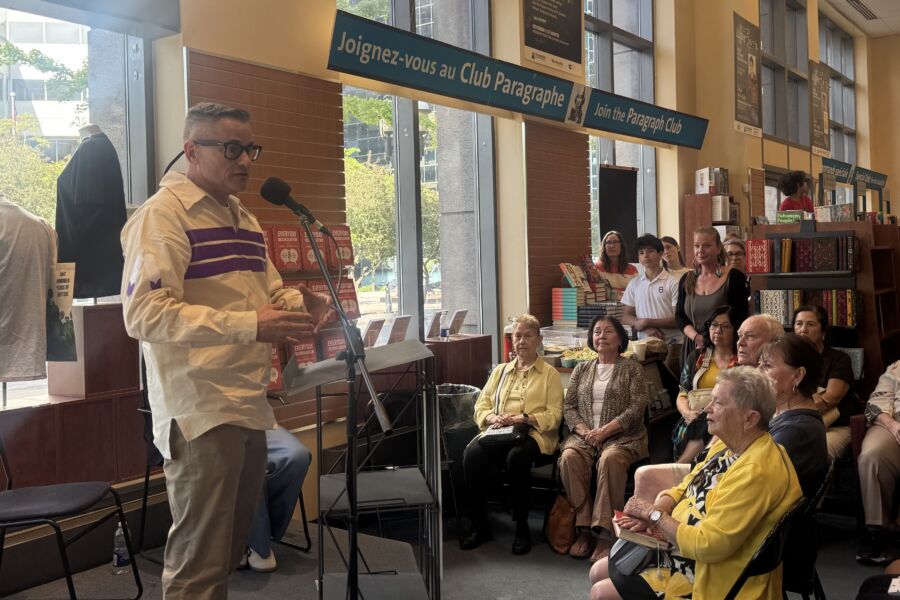
“It’s one thing to get your story out and have a publisher accept it and then start working on it, but it’s another thing to see the impact it has,” said Katsi’tsakwas Ellen Gabriel, who accepted three awards for her book When The Pine Needles Fall, with her co-author Sean Carleton, on June 3.
*“It’s been something of a gift to have such attention, comments, and feedback,” she said.
Gabriel and Carleton took home the Errol Sharpe Annual Book Award from the Society for Socialist Studies, the Canadian Historical Association’s Indigenous History Book Prize, and the Wilson Book Prize, from the Wilson Institute for Canadian History.
All three awards were presented on the same day in Toronto, leading to a packed schedule for Carleton and Gabriel.

“It was a busy day, but really, really lovely nonetheless,” said Carleton.
The book, which is a transcribed dialogue between Carleton, a settler historian, and Gabriel, covering the history of the Siege of Kanehsatake, as well as thoughts about the past, present, and future for Onkwehón:we.
“Awards are nice, but ultimately they bring more readers to the book, and that I think is the most exciting part,” said Carleton. “All of this means more people will read what Ellen has to say, and that I think is very gratifying.”
Gabriel said it was an honour to be nominated alongside so many other great minds at the awards, particularly for the Indigenous History Book Prize.
“Considering who was also nominated, and all the brilliant Indigenous authors and academics out there writing about history, to win this is really quite prestigious, and it’s quite an honour to have this story that we all lived through recognized,” she said. “It’s humanized our people, it’s humanized who we are, rather than what the government or the media tells people we are, and that was part of the goal.”



Gabriel said that she’s also hopeful that the awards will lead to even broader consumption of the book, with more people able to learn from the lessons contained within it, particularly youth.
“I think it helps bring it to a different level of recognition, maybe people thought before ‘Well, it’s just an activist’s point of view,’” Gabriel said.
“But now it’s a national bestseller, it’s winning awards, it gets that interest from people who I think would normally ignore it. And that’s helpful for getting this story to be heard and shown throughout the world.”
Carleton said he’s particularly hopeful that the book can be used as an educational resource for future generations, particularly as more academics who might teach the book in their courses are exposed to it through awards like these.
“It’ll hopefully have a ripple effect, where younger audiences and students will have the ability to take courses on Canadian history, and have someone like Ellen shift their perspectives,” Carleton said.
Sign up for email updates from The Eastern Door
Though it was a packed day of accepting awards, Gabriel said it was worth it to see the impact of the work.
“It’s amazing, it was shocking to see that we’d won three, and it was an extremely big honour for the two of us,” she said.