Tattoo gathering returns to Kanesatake
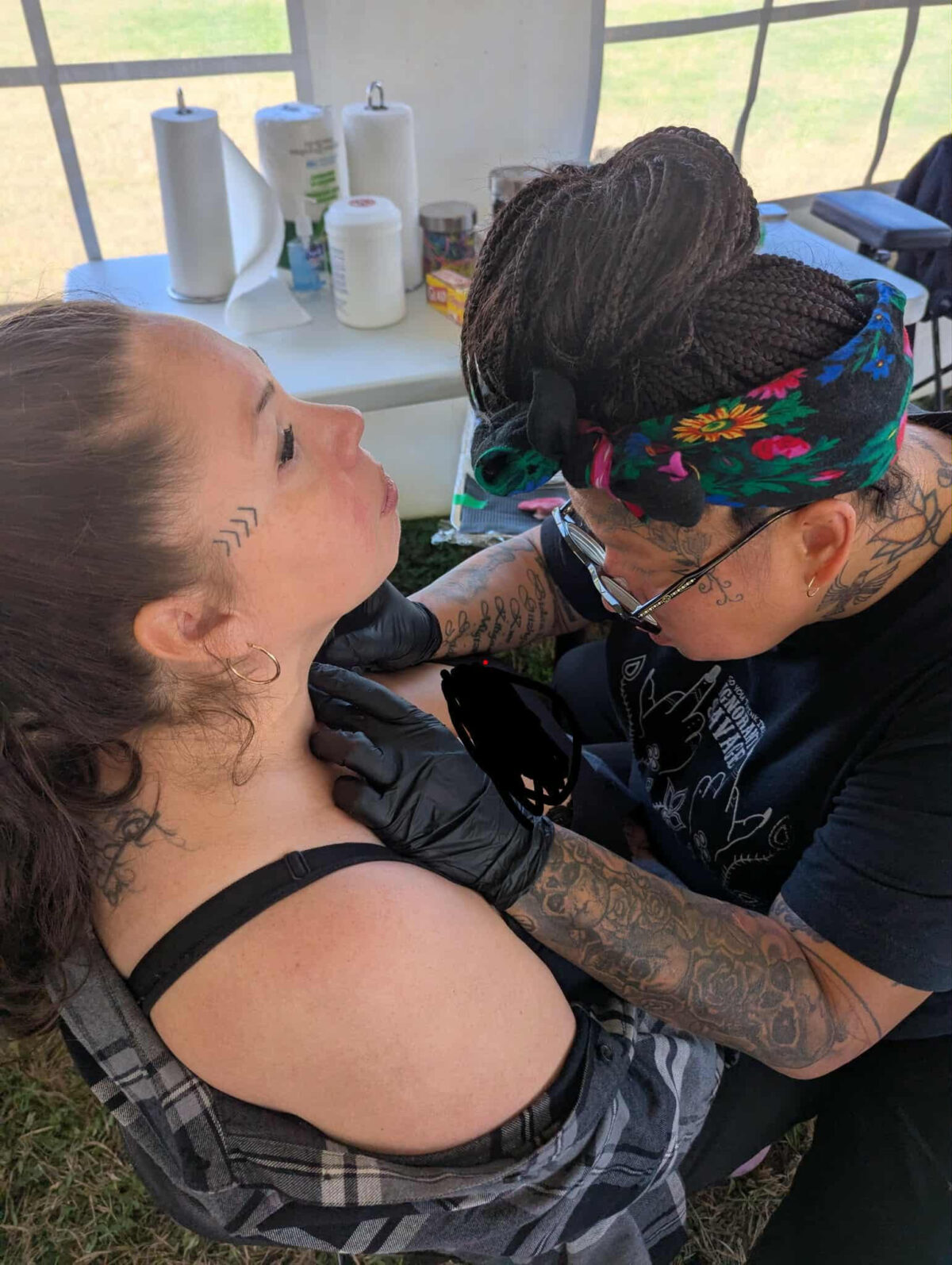
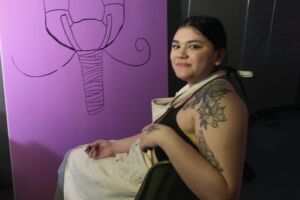
Tara King (left) sits as she receives a traditional tattoo from her mentor Crystal Kimewon (right). Courtesy Tara King
The fire burned low in the centre of the grounds, surrounded by canvas tents, folding chairs, and the steady hum of a drum. Just beyond, someone winced and smiled as ink met skin, not in a studio, but on the land.
It was the fourth annual Kanesatake Traditional Tattoo Gathering, a three-day event that brings Indigenous tattoo artists, knowledge keepers, and community members together to revitalize traditional tattooing.
Some came to be tattooed. Some to bear witness. Others simply sat by the fire, ate bannock, and listened. But for everyone, it was about more than ink.
“It’s ceremony,” said organizer Karonhienhawe Nicholas. “Our markings tell stories of family, grief, survival. They’re how we remember.”
The event welcomed Indigenous artists from across Turtle Island, from Massachusetts to Northern Ontario, and from right there in Kanesatake. Tattoos were done in the hand-poke style, a slower, more deliberate method deeply rooted in tradition and meaning.
One of the artists, Miciah Stasis-Harding of the Herring Pond Wampanoag Nation, shared a remark as this is her third time attending, “It made so much sense being here,” Stasis-Harding said. “To sit with other Indigenous artists, to share, to learn. It was powerful. I’m bringing all of that home with me.”

Miciah prefers the stick-and-poke method for both its spiritual connection and the gentler experience it offers to the mind and body.
“You receiving and getting your markers, that’s frontline work. With tattoos, you have to really walk in them,” she said. “You’re honouring your story, your ancestors. And to be trusted with that. It’s medicine, for them and for me.”
From Ontario, artist Tara King was invited by fellow tattoo artist Crystal Kimewon. She packed her gear and headed straight to the Pines.
She tattooed her husband, a land defender, then received her own tattoo. She remembers placing her feet flat on the ground as she was marked.
“I could feel the earth under me,” she said. “It felt more powerful to be tattooed while the wind blew and the sun shined. I even took my Crocs off. It was more than a tattoo it was connection.”
For community member Catherine Gabriel-Ferland, the gathering was something she’d been waiting for a chance to receive a tattoo from an Indigenous artist, in a traditional way.


“I’ve always used tattoos to tell my story,” she said. “This time, I wanted to do it in a way that connected me to my roots.”
Her design showed her children as baby ducks following her, alongside her beloved pets.
“I felt surrounded by good people, good food, and laughter. It felt like home.”
A first-timer, Junii Crp, had never been tattooed before, and just decided to show up.
“I wasn’t expecting it to be so emotional,” she said. “Miciah held my hand while she was tattooing me. I’ll never forget that.”
Her tattoo honours her mother’s strength. “This tattoo reminds me of who I am. Where I come from. And how I want to carry myself.”
Sign up for email updates from The Eastern Door
Karonhienhawe Nicholas says next year she wants to get the word out more, fundraise earlier, and make space for even more artists and community members to attend. But even now, with limited funds and hands, the gathering has already become something people are looking forward to and returning to annually.