Skawennati spotlit for solo show
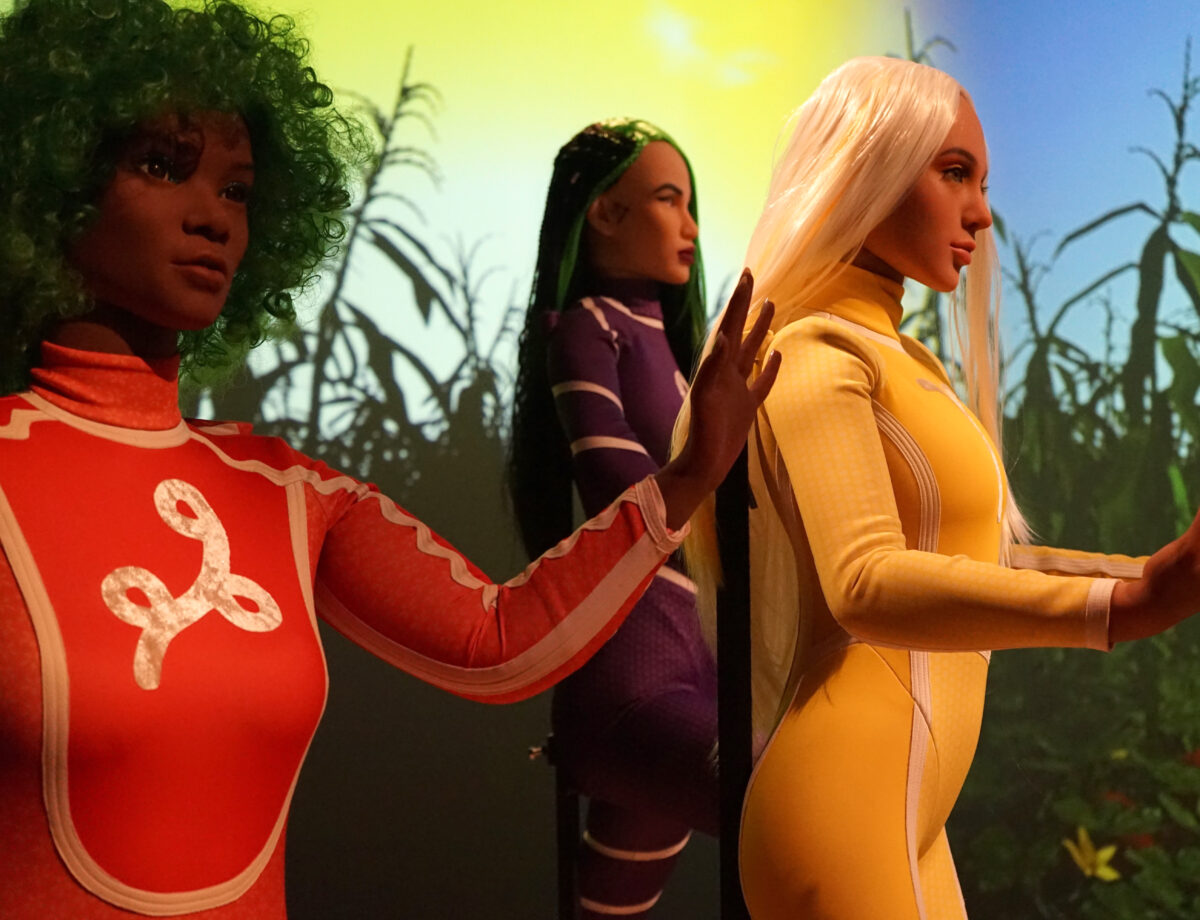
The Three Sisters are personified as futuristic superheroes in Skawennati’s piece Reclaiming
Abundance. Courtesy Patrick Altman & National Gallery of Canada
In the year 1999, local artist Skawennati was commissioned to make a timeline of 1,000 years of Indigenous history.
Like most historical timelines, it starts in the past, in the year 1490 - two years before Christopher Columbus first landed on (or near) Turtle Island. But unlike most historical timelines, it spans far into a yet-to-exist future, ending in 2490.
The piece, Imagining Indians in the 25th Century, now signifies the start of another timeline, one that features Skawennati’s extensive body of work made between the turn of the millennium and now. It’s a seed from which many more projects have grown, and the first stop on an extensive tour of Skawennati’s art, now on display in the exhibit Skawennati: Welcome to the Dreamhouse at the National Gallery of Canada (NGC) in Ottawa.
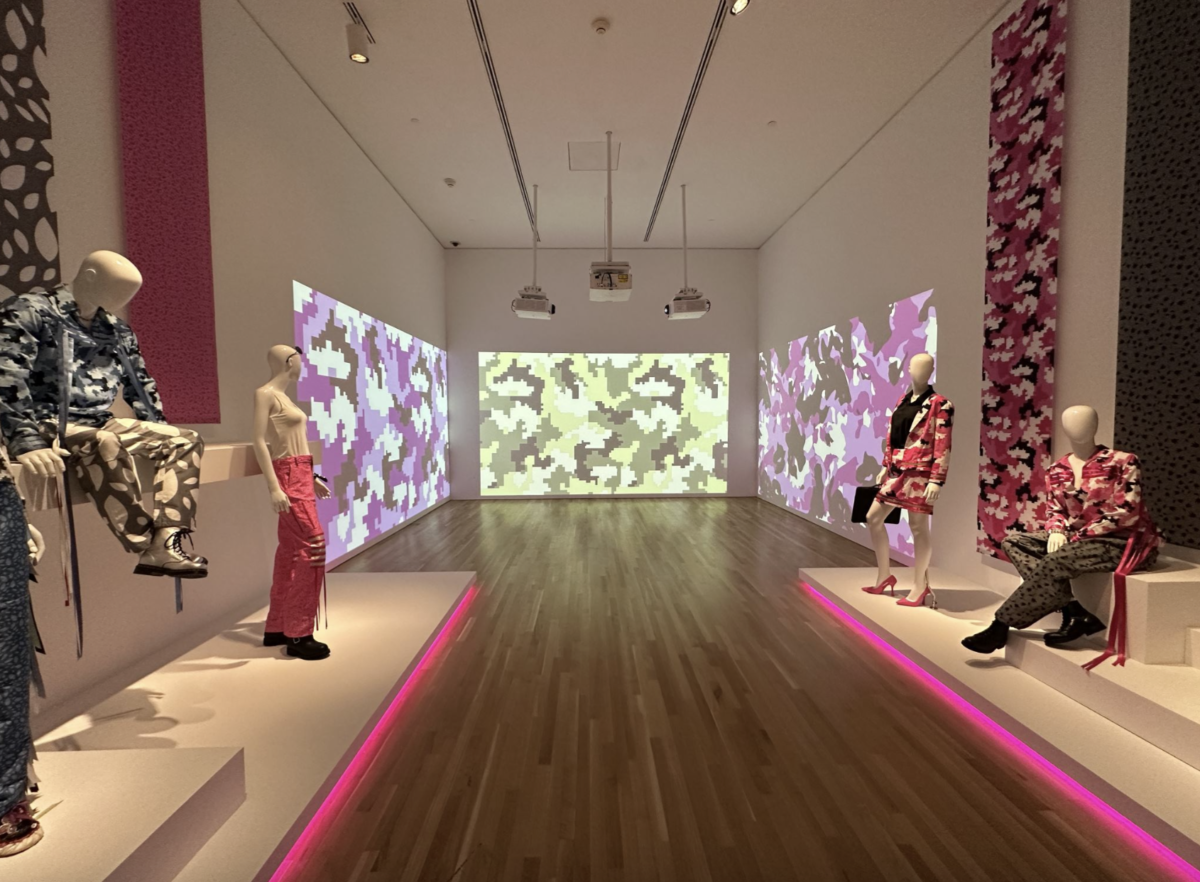
Skawennati's signature neon pink is laced throughout the exhibit. Courtesy Jason Edward Lewis
“I feel elated. I’m very lucky,” Skawennati said.
The exhibit, which will be open until September 1, officially opened last week. Guests are invited to take a tour of Skawennati’s expansive digital landscapes, often created using machinima, a type of animation made with video game engines, Skawennati’s pieces make comment on Indigenous identity, history, and future, and often feature her own virtual avatar, XOX.

Attendees can experience pieces like Dollhouse Longhouse, a 90-second machinima projection-mapped onto a miniature version of a traditional longhouse-like structure, and They Sustain Us, where corn, beans, and squash are personified as superheroes.
That piece features Kahnawa’kehró:non Skanaie:’a Deer and Ieronhienhawi McComber the voice of Osahè:ta’ (beans) and Onon’ónsera (squash) respectively, who were also models for the fashion collection component of the project.
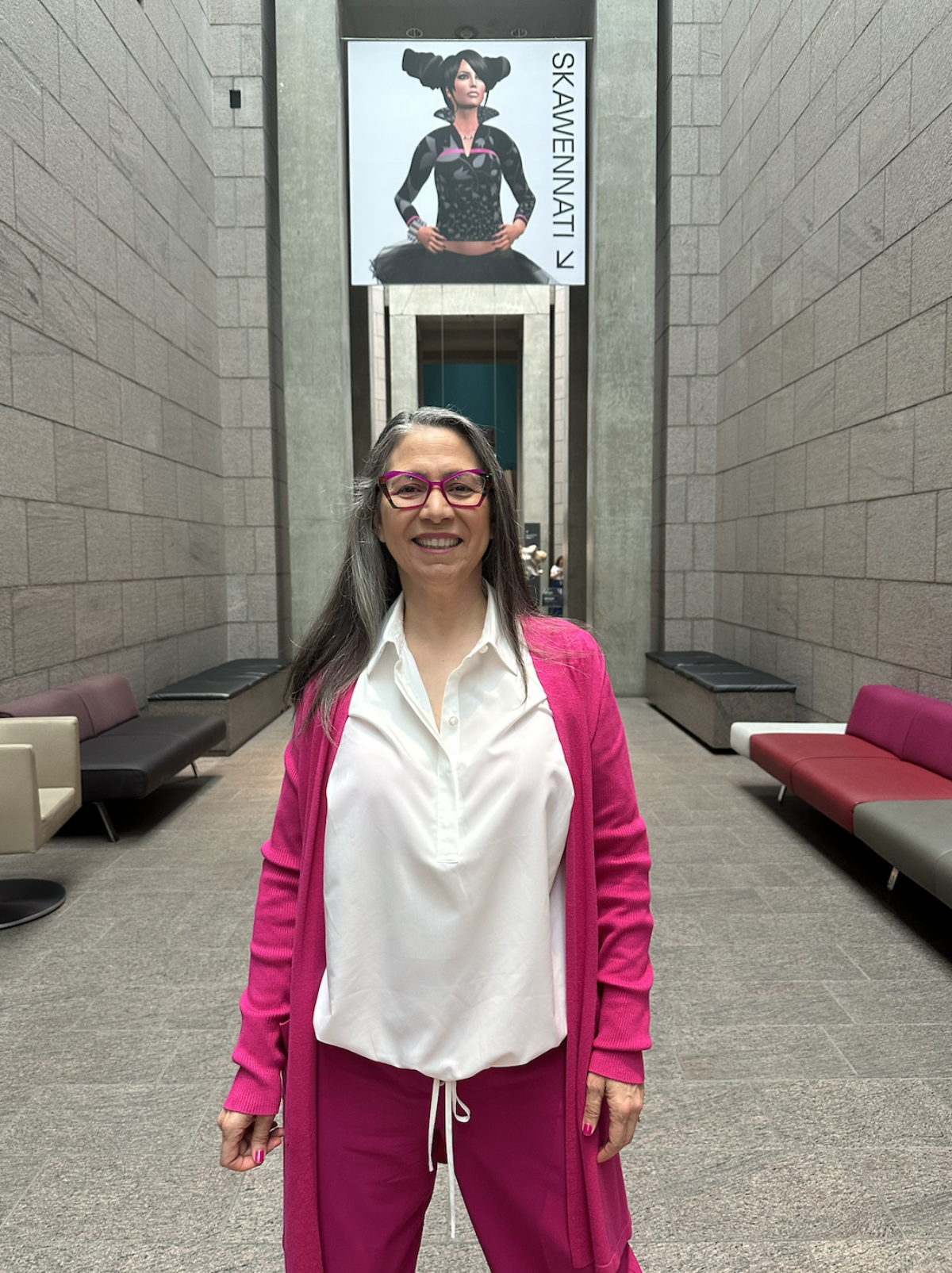
Skawennati with her virtual avatar, XOX, at the entrance to the show. Courtesy Jason Edward Lewis
“I was really thrilled that they lent me their voices and their good minds to make that piece,” Skawennati said.
Voices of Kahnawake feature in many of Skawennati’s works, including TimeTraveller™, a nine-episode machinima series presented alongside still images and sculpture, that tells the story of an angry young Mohawk man in the 22nd century.
“I really had a lot of help from community members on all of these works, with TimeTraveller™ it was really in the form of voice talent, and for most of the episodes, there’s always someone from Kahnawake whose voice you’re hearing,” Skawennati said. “I’m talking about our people, so it’s really nice that you hear our people talking.”


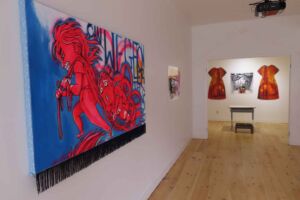


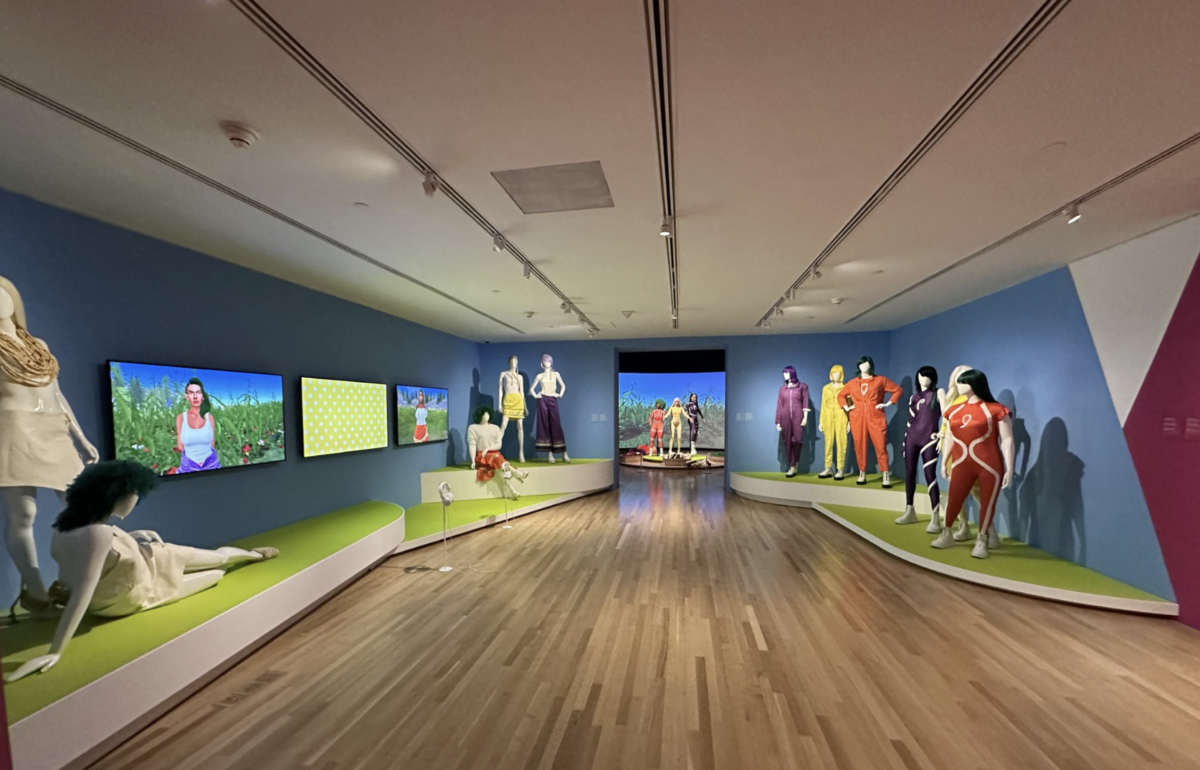
The show includes work by Skawennati from 2000 until now. Courtesy Jason Edward Lewis
Kahnawa’kehró:non Wahsontiio Cross, who is associate curator, Indigenous ways and decolonization at the NGC, is the creative mind behind the show - the first show that she had pitched since starting at NGC.
“I feel very fortunate that I get to have this role of presenting her work to the wider public, and being able to really explain and share our culture with people who might not be familiar with it,” Cross said. “Being able to mediate that information to the public is one part of my role as a curator in general that I have a real appreciation for.”
Cross is particularly excited to show some of Skawennati’s fashion pieces in the show – while they’ve been modelled on the runway, they’re not often displayed in exhibits, and the NGC team purchased 20 mannequins for the show, ensuring they were of certain specifications to fit the array of body types featured in the work.
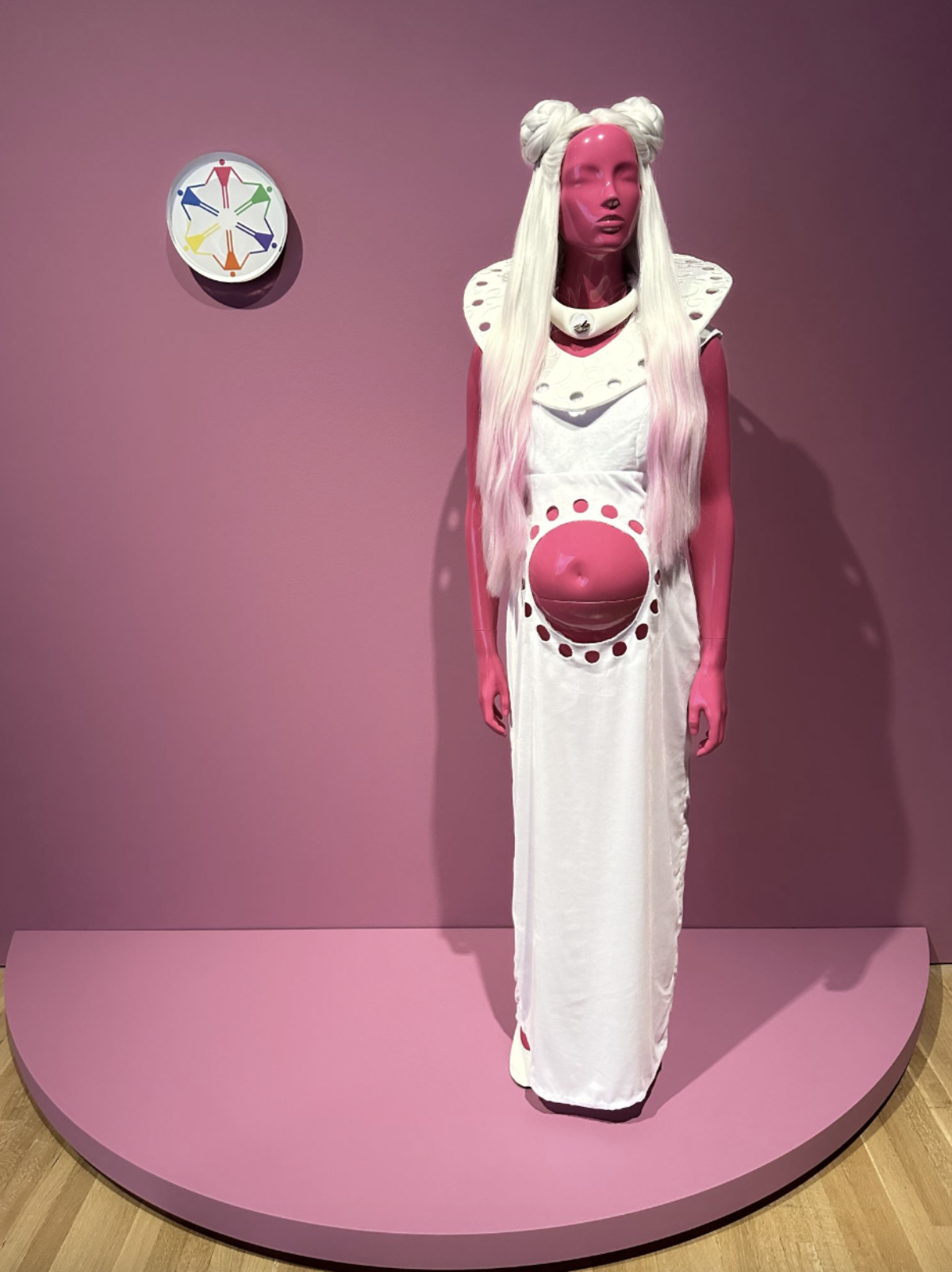
Fashion is a major part of the show. Courtesy Jason Edward Lewis
“It was really important to me to show the fashion work because it’s this newer aspect of her practice, and I felt it was really important and exciting to show,” said Cross, adding that the NGC doesn’t often show fashion pieces, making it a particularly unique component of the exhibit. “It was kind of a different type of challenge for everyone, but it was really satisfying when it did come together.”
Sign up for email updates from The Eastern Door
For Skawennati, working with the gallery has been a great experience. She said that having an exhibition designer allowed her to bring her pieces to life even more, incorporating touches like a circular couch and painting the rooms beautiful bright colours to build a futuristic environment in each room.
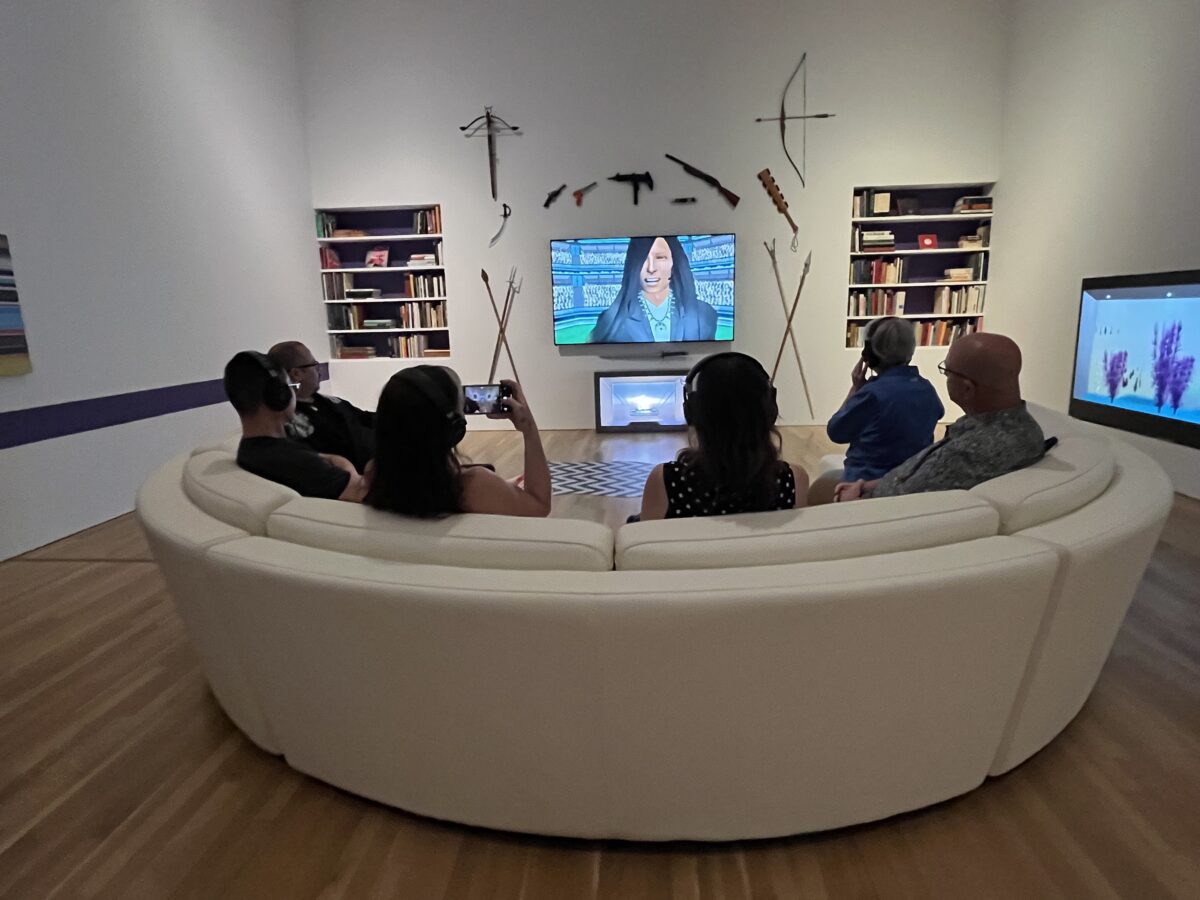
Guests can watch TimeTraveller™ on a circular couch, part of the exhibit's futuristic design. Courtesy Christine Redfern
“I feel seen. I think a lot of artists feel the way I feel, which is that I have this need to create. I’m a maker, and I get these instructions from the Creator to make something, and I have to make it,” Skawennati said.
“For other people to be interested in that and in what I make is such an incredible privilege and joy and relief. And for them to think it’s important enough to put into the National Gallery of Canada feels fantastic.”