Roque excited for opportunity with Victoire
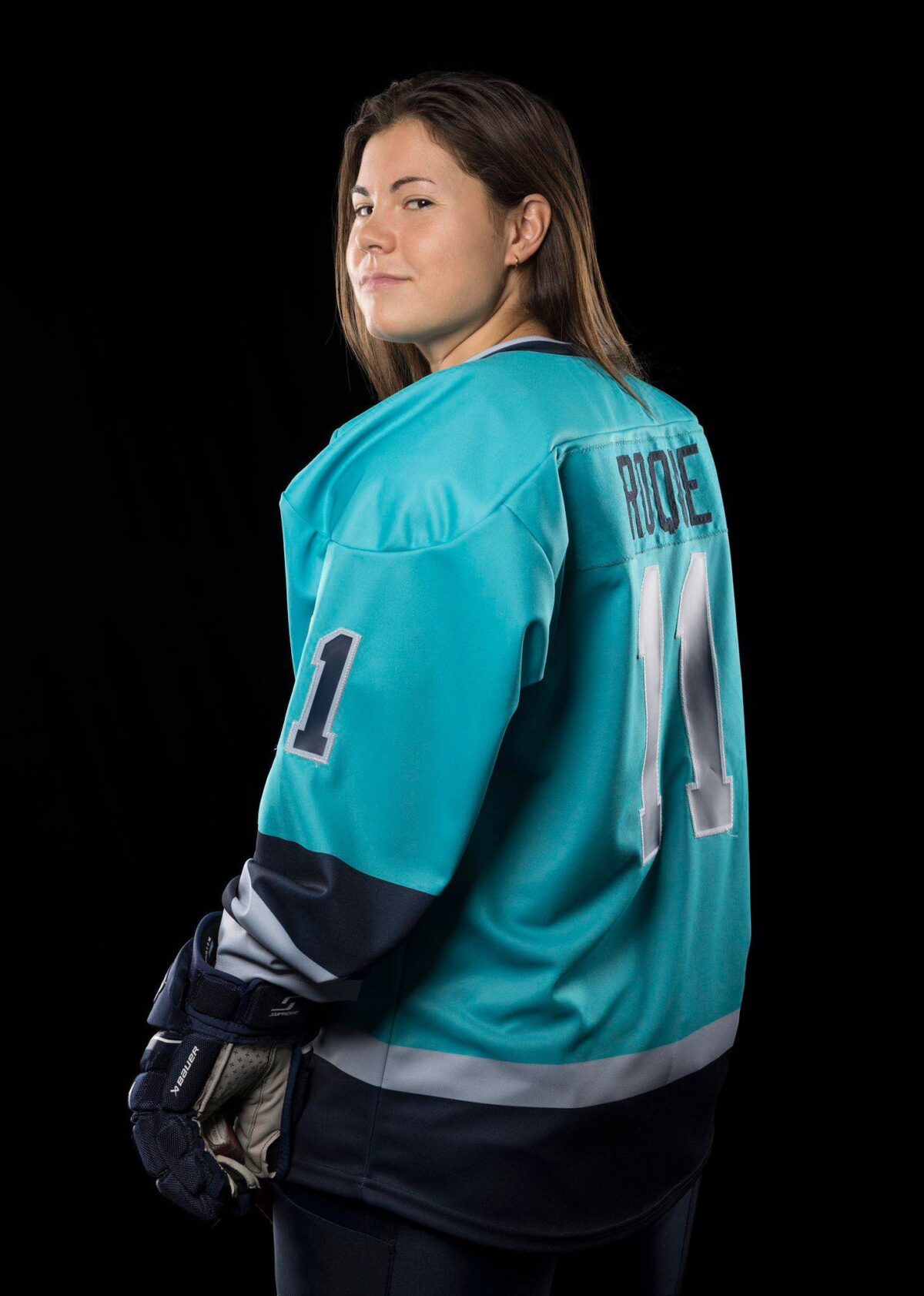
After spending two seasons with the New York Sirens of the Professional Women’s Hockey League (PWHL), Abby Roque was traded to the Montreal Victoire in exchange for Kristin O’Neill and a fourth-round draft pick. Courtesy Hockey Indigenous
Wahnapitae First Nation member Abby Roque (Ojibwe) is one of many new faces coming to the Professional Women’s Hockey League (PWHL)’s Montreal Victoire this offseason, being traded for from the New York Sirens in exchange for Kristin O’Neill and a fourth-round draft pick.
The 27-year-old forward has been in the PWHL since the league started for the 2023-2024 season, accumulating 12 goals and 18 assists in 54 games over two seasons with New York - one of those goals being the first “Michigan” goal in PWHL history.
The Eastern Door spoke with Roque about being traded to Montreal, what she hopes to bring to the team, and being a role model for younger Indigenous hockey players.
This interview has been edited for length and clarity.
Q: What are your feelings on joining the Montreal Victoire?
I’m very excited. I think it’s a great organization. The city of Montreal is such a great hockey city, it’s great to play somewhere like that. After playing against Montreal the last two years, you can really see how well they’re coached and how they play. It’s always a challenge to play them. So, I’m very excited about the next chapter in Montreal.

Q: What was your reaction to the news that you had been traded?
I was very excited to be joining an organization like Montreal. I obviously will miss my teammates and the fans in New York and the city itself was amazing, but I think it’s a great opportunity for me to head to Montreal.
Q: How do you think the two seasons you spent in New York will help you with the Victoire?
You learn a lot every year as a hockey player, and if you’re not, you’re not doing your job. You want to be a sponge, and you want to learn different styles of play. You want to learn different roles. And I think in New York, I had to play a lot of roles at all times, I played a lot of minutes, and I think that will only benefit me. I think last year I had a great season, and I really jumped from the year before. So, I’m just hoping to really keep that going and just keep improving.
Q: Speaking of roles and playstyles, you’re bringing a heavier playstyle to the Victoire, an element that some fans of the team have felt has been lacking, particularly in the playoffs. How do you think that will mesh with some of the players already on the team?
I think that’s definitely a factor for why I was sought after, and I love that. I want to play that role. I enjoy it. I like being the person on the ice who gets on the forecheck, that hits people, separates people from pucks, maybe gets under the other team’s skin, make it really difficult to play against, but I think that will help other players. If you have somebody on your line who can do some of that work and make it hurt to play against your line, and just be able to get pucks back, things like that, it is really beneficial. You see one person doing that, you hope that two or three or four more jump in.

Q: There have been a few times playing against Montreal where it seemed like you did get under people’s skin. Now that they are your teammates, does that factor into your relationship with them?
Some of my best friends who I play against, I go on the ice and I make them very angry while I’m playing them, and then the second I leave the ice, I just kind of smile, and I’m like, ‘hey girls.’ And they’re like, ‘Abby, you were so annoying today.’ Well, that’s the job, but it’s something I want to do, and it’s something that I think every team needs. I don’t want to be somebody who other teams want to play against. I want them to dread it, and I think that’s the best way possible to play this game. It’s a physical, fast-paced game, and I’ve gotten under some Montreal players’ skin. The fans have booed me before, which I loved. Honestly, I thought it was amazing. To play in front of that kind of fan base will be really interesting, but I’m hoping to bring that kind of play for Montreal now.
Q: How important is your Indigeneity to you, and how does it make you feel to have younger Indigenous players potentially look up to you as a role model and an inspiration?
It’s part of who I am, and it’s been a huge thing throughout my life, and I take great pride in being an Indigenous player.
When I’m on the ice, yes, I’m trying to win, but you have to remember there are kids out there that you’re trying to inspire. It’s not just about me or the team. It’s always a bigger picture of who you want to be looking at you on the ice and feeling inspired and feeling influenced that they can go out and play.
I think it’s so important for young girls and boys who are Indigenous to have somebody to look to who is like them who has made it to this level, so they know that it is possible, and it’s something that anybody can achieve, and that hockey really is for them if they want it to be.
I’ve always tried to pride myself on that, trying to be a good role model for kids, trying to get out to different events that I can go to and talk to Indigenous youth. The more you can interact with those kids, the more they can believe that they can be the next person playing in the pro leagues.
Sign up for email updates from The Eastern Door
Q: One last question: Are you going to try to score another “Michigan” goal (an extremely rare type of goal that resembles a lacrosse shot, scored by wrapping around the high part of the net from behind it)?
I would love to do it again. I was lucky enough to have the perfect setup to pull it off. Doing it in Montreal would be really fun, especially with that crowd there. So maybe I can do it one more time.