Rice leads Sixties Scoop film
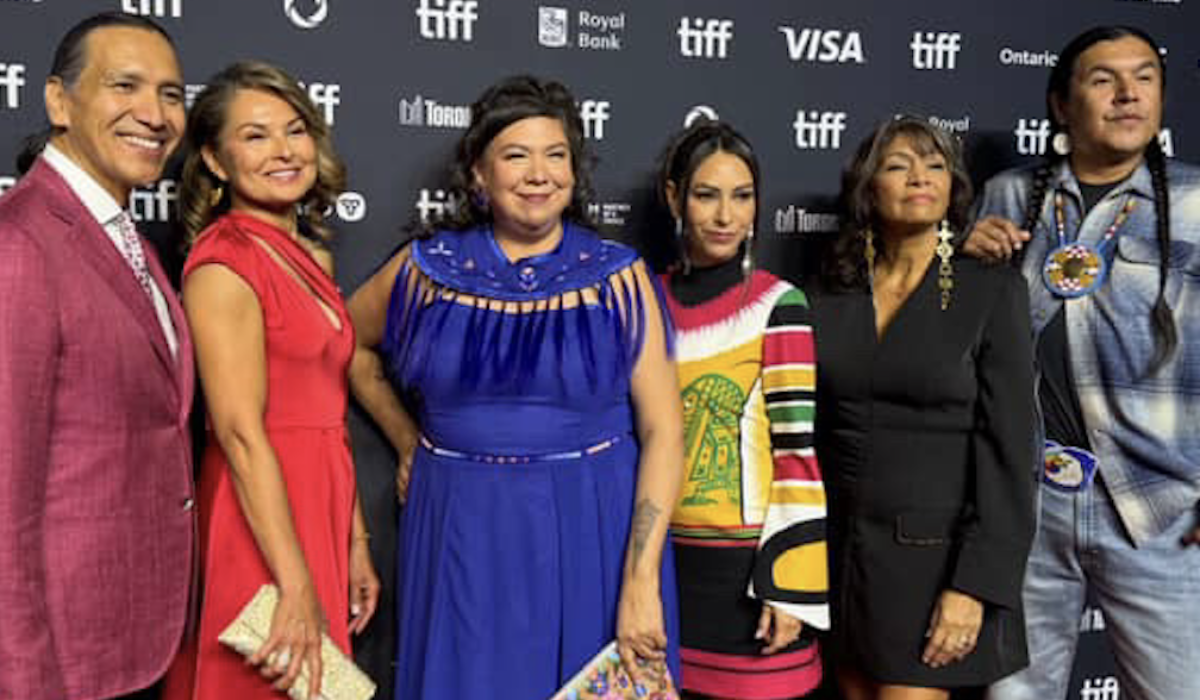
From left to right: Michael Greyeyes, Alex Rice, Tasha Hubbard, Carmen Moore, Michelle Thrush, and Lorne Duquette at the premiere of Meadowlarks last week. Courtesy Alex Rice
When Alex Rice first received the script for Tasha Hubbard’s Meadowlarks, before she had been officially cast, one character in particular jumped off the page.
“Her name is Marianne,” Rice said. “She grew up in Belgium where she didn’t fit in because she didn’t look like everybody else. She was Indigenous, so she had to find ways to make herself acceptable. To try and adapt.”
Hubbard’s film, which premiered at the Toronto International Film Festival (TIFF) last week, follows the story of a group of siblings separated as babies during the Sixties Scoop, who connect over the course of a week in Banff.
The film is based on Hubbard’s documentary Birth of a Family, which follows the real story of four siblings also separated by the Sixties Scoop, who piece together their family history and build a new familial connection together.
One of those real siblings, Betty Ann Adam, served as an executive producer for Meadowlarks, and Hubbard herself is a Sixties Scoop survivor, something that Rice said makes for an incredibly personal narrative in the film itself.
“There was such commitment that everybody had to pay so much respect to this story, and to honour the people who are victims and survivors of the Sixties Scoop, to honour those people trying to find their way back home,” Rice said.

Rice said the film is the highlight of her career so far. Courtesy Alex Rice

Like Hubbard, the siblings in Meadowlarks are Cree, though the struggle to connect with their Indigenous identity is a major plot throughout the film.
Rice’s character Marianne is perhaps the most disconnected from her Indigenous identity, having grown up the farthest from her community.
“She speaks French and Flemish and she speaks with an accent, she really doesn’t have any idea what it means to be Indigenous, and she’s got a completely European mindset,” Rice said.
Rice had to find how to connect with Marianne’s lack of belonging, her inability to fit in - not just in Belgium, where she looked different to the people around her, but with her siblings, who speak a different first language and who don’t carry the same accent she does.
In preparing for that, Rice thought about times where she’s felt the same sense of discomfort, and landed on her experience growing up with autism, only recently diagnosed at the age of 51.
“I lived my whole life masking that so I can fit into social situations, into society, into my family. I could see a parallel between her experience where she’s trying to fit into a country where she doesn’t look like anyone in her family, because she had to adapt and mask,” she said.
“That hit me hard because it’s what I’ve been doing my whole life. I got my diagnosis about nine months before the audition request came in, so I’ve been dealing with a lot of grief about it and trying to process that looking back on my life.”


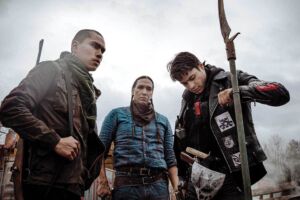

Playing the other siblings are Michael Greyeyes and Michelle Thrush who are Cree, and Carmen Moore, who is of Wet’suwet’en and Scottish descent. Greyeyes and Rice have been friends for more than two decades and so relied on their closeness to bring to life their connection as siblings, whereas Thrush and Rice had never met, channelling their unfamiliarity into their on-screen dynamic - a similar dynamic that she had with Moore, who she had only met on a small project before.
As the cast breathed life into their characters, they deepened their connections to the story and to one another as actors, and Rice credits the additional cast and crew with their vigilance in prioritizing mental health while dealing with a heavy emotional narrative.
“It was really beautiful, there was cultural training for all the non-Indigenous crew members so that they could better understand the scope and importance of this issue, so that was really helpful and it really brought everybody together,” she said.
“We had a wellness coach on set to help us dealing with a lot of trauma and emotional work, and when we were filming they would invite an elder to talk to us and give us a welcome, to tell us about the land we were on.”
Being able to work with a cast and crew that was truly Indigenous-led was a special experience, Rice said, and stepping onto TIFF’s red carpet surrounded by Onkwehón:we left her feeling proud of the talent that has come from communities across Turtle Island.
“TIFF is so prestigious so to even premiere here is just an incredible achievement,” she said.
The team celebrated more than just premiering – the film received two standing ovations during its screenings at TIFF.
Sign up for email updates from The Eastern Door
“It’s so validating. You’ve accomplished what you’ve set out to do, and that’s to make people feel something, to open someone’s eyes and heart and use your humanity to touch another human being, it’s what it’s all about,” she said. “I don’t even have words for how proud I am of this work. It’s the highlight of my entire 30-year career.”
Details about the theatrical release of Meadowlarks are yet to be released, but should be available in the coming weeks and months.