Recording the past for the future
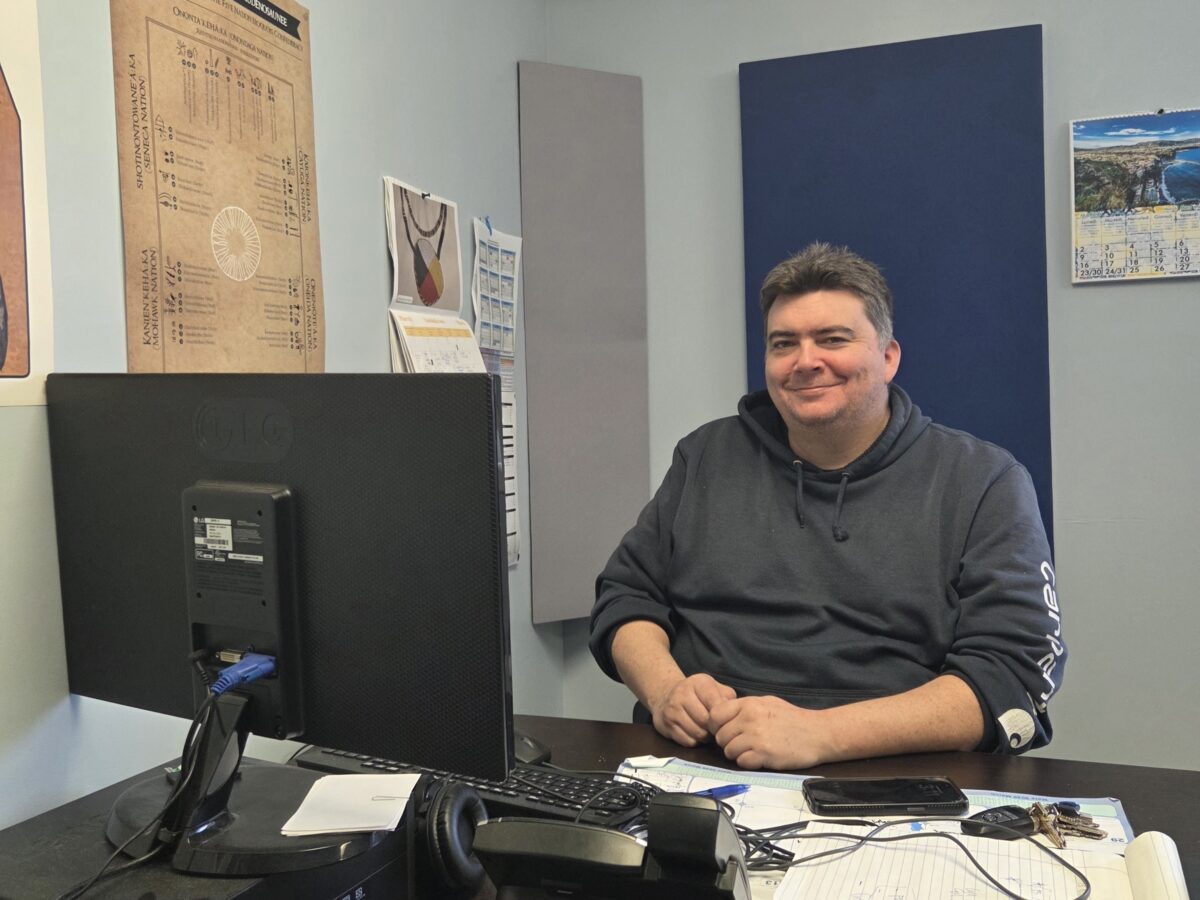
Kevin Nelson in his office at Tsi Ronterihwanónhnha ne Kanien’kéha Language and Cultural Center. Fern Marmont The Pines Reporter
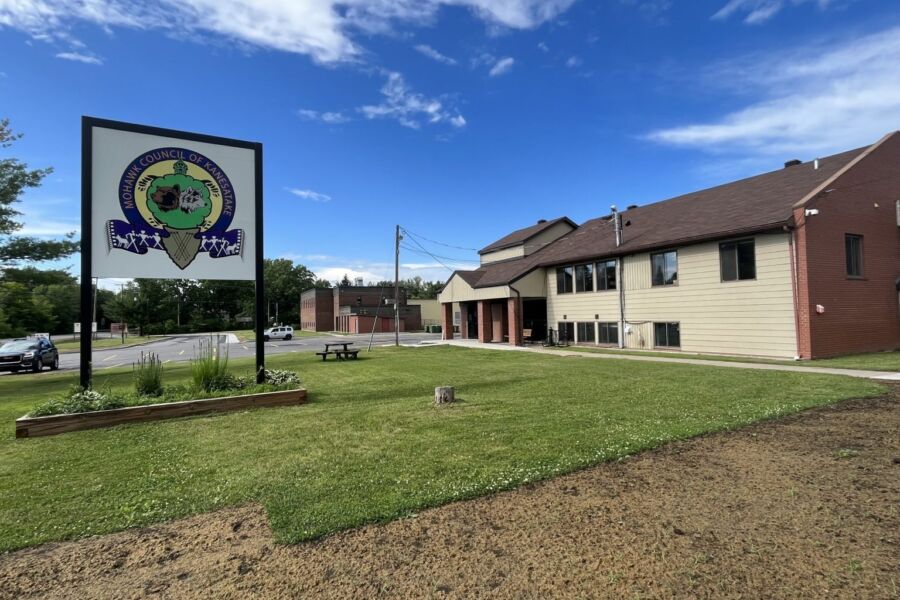
A recording initiative led by the Tsi Ronterihwanónhnha ne Kanien’kéha Language and Cultural Center aims to preserve the voices, stories, and language of elders in Kanesatake for future generations.
The project, titled Tsi Nitiohtónhne, translates roughly to “the way it was” or “how it was,” according to the cultural centre’s language development officer, Kevin Nelson.
Tsi Nitiohtónhne focuses on documenting the lived experiences of first-language Kanien’kéha speakers, capturing history that might otherwise be lost.
“It’s a great initiative, hearing first-language speakers talk about their upbringing,” said Hilda Nicholas, director of the cultural centre.
Nicholas added that the recordings will serve as an important resource not only for second-language learners, but also for community members seeking to better understand Kanesatake’s history.
“Our people need to hear about our elders who have lived it, lived our history,” said Nicholas.
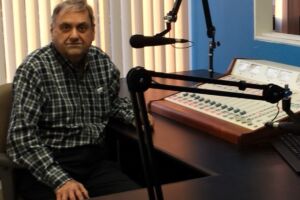
The project has been in development for several years, collaborating with Reviving Kanehsatà:ke Radio (RKR) 101.7 FM. During that time, Nelson has conducted between 10 and 15 interviews with elders and community members.

He expects to complete the editing process in the coming months and plans on starting more interviews this spring.
Once finalized, the recordings will be added to a digital database, where they will be preserved and made accessible to the community.
“We interview different elders in the community, talking about what it was like growing up here,” said Nelson. “We talk about different periods of time.”
Beyond documenting history, the initiative places a strong emphasis on language preservation. Interviews are conducted in Kanien’kéha, and then later translated into English, making them accessible to both fluent Kanien’kéha speakers and learners.
“We need to hear our first-language speakers. We need to record them because they’re passing away every single year,” said Nelson.
Nelson noted that earlier generations of elders were not always recorded, leaving gaps in the historical record of the community.
“When I look back 30 or 40 years ago, we missed recording a whole generation of elders,” said Nelson. “We don’t know their stories.”

Tsi Nitiohtónhne seeks to ensure that loss of history doesn’t happen again, by building a lasting archive of community history and knowledge.
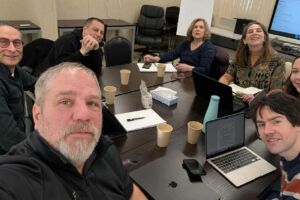
The project is also expanding with a collaboration with a small group from the McGill University linguistics department, who are offering help and training with an open-source transcription tool called ELAN, originally developed by the Max Planck Institute.
The tool is able to create time-aligned, multi-layered annotations on audio and videos.
“Last summer, we were sort of like a travelling circus of transcription workshops,” said Jessica Coon, a professor of linguistics at McGill University, explaining how she and her team ran training sessions in Akwesasne, Kahnawake, and Kanesatake.
“I think it’s some of the most impressive language revitalization that I know of anywhere,” said Coon.
While ELAN is free software anyone can use, Coon said it can be a bit unwieldy, but the effort is well worth it.
“Across Kanienʼkehá:ka (communities), there is an urgency of documenting first-language speakers,” said Jessica Coon.
Sign up for email updates from The Eastern Door
“It’s for future generations being able to look at how we use our words,” said Nelson. “It’s another resource that hopefully we can have for future language learners.”
Nelson shared that this work has also deepened his personal connection to the community. It even gained him two cats when an elder he was interviewing over a period of time convinced him to take two kittens from their cat’s litter.
“I feel fortunate,” said Nelson. “The more connected you are to your community, the more you realize there’s more good to people than bad.”
Fern Marmont, Local Journalism Initiative Reporter