Planting hope, seeding connections
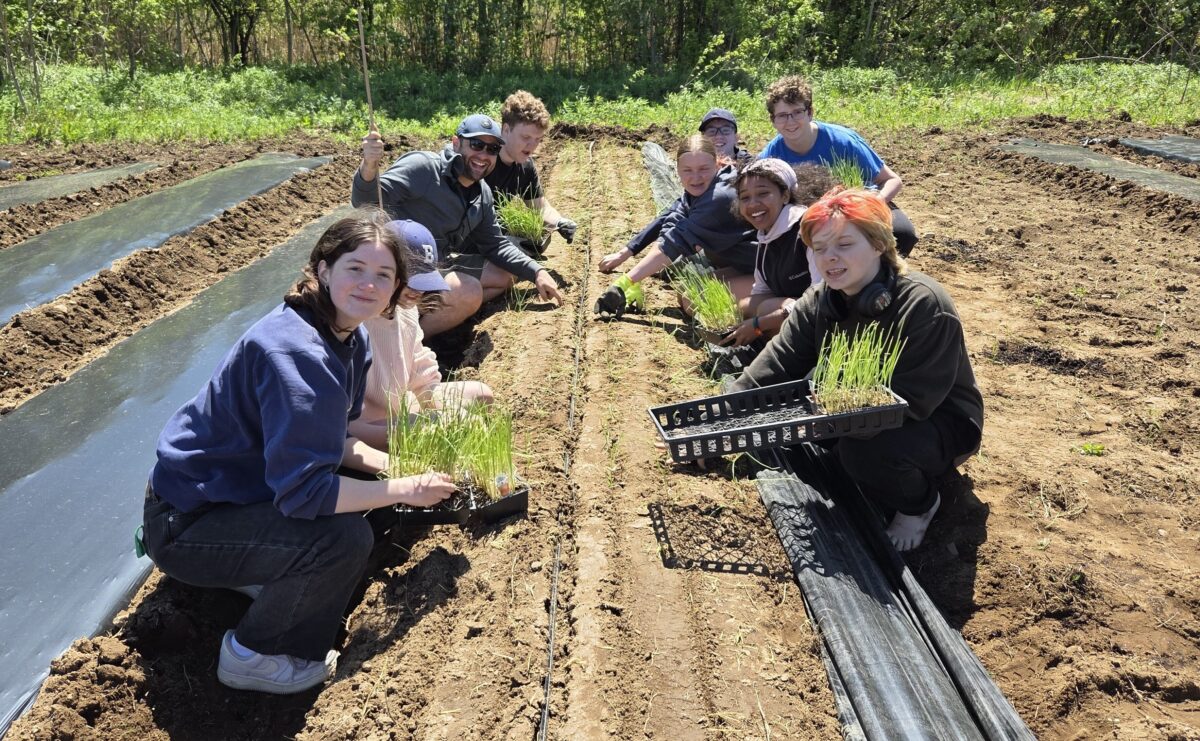
Chris Barrigar and his youth group planting onions. Fern Marmont The Eastern Door
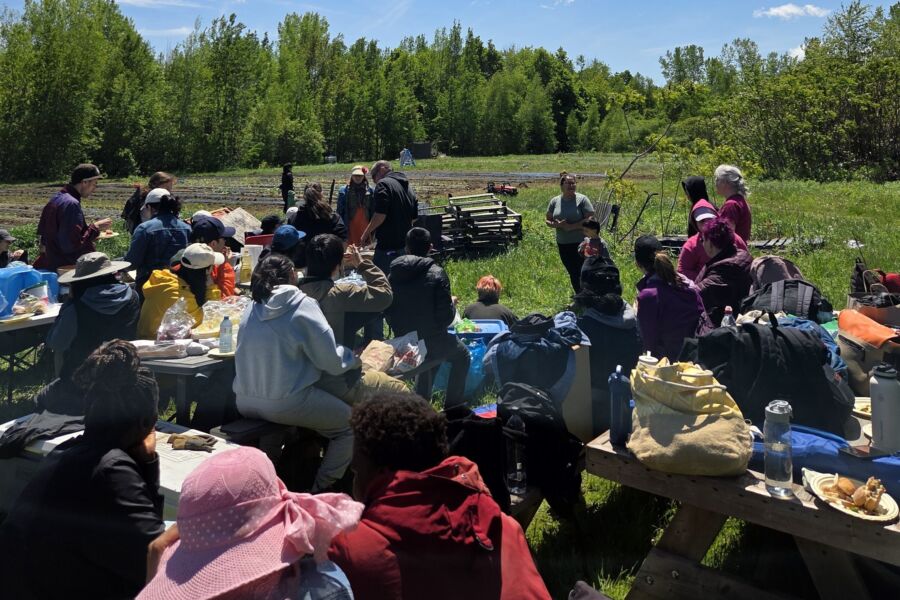
Rows of tomatoes, peppers, lettuce, onions, and flowers stretched across the field as over 70 volunteers knelt in the soil, using trowels or their bare hands to plant this season’s crops at Gardens of Hope’s annual planting day.
The annual planting and fundraiser day on May 30, brought together church groups, urban gardeners, youth leaders, and community members to get their hands dirty in the blustery yet bugless day that marked Gardens of Hope’s biggest turnout.
“I’m so happy with the turnout today. These are partnerships we’ve built over time,” said Gardens of Hope founder Karyn Wahsontiiostha Murray.
“The principle of Gardens of Hope is really coming together, working together, to benefit Kanesatake,” said Murray. “So that we can be more sustainable in our food.”
Created as a community food security initiative, over the seven years since its creation, Gardens of Hope has evolved into a space that combines agriculture and education; it supplies fresh produce for the community while offering a space to reconnect with the land, one another, and oneself.
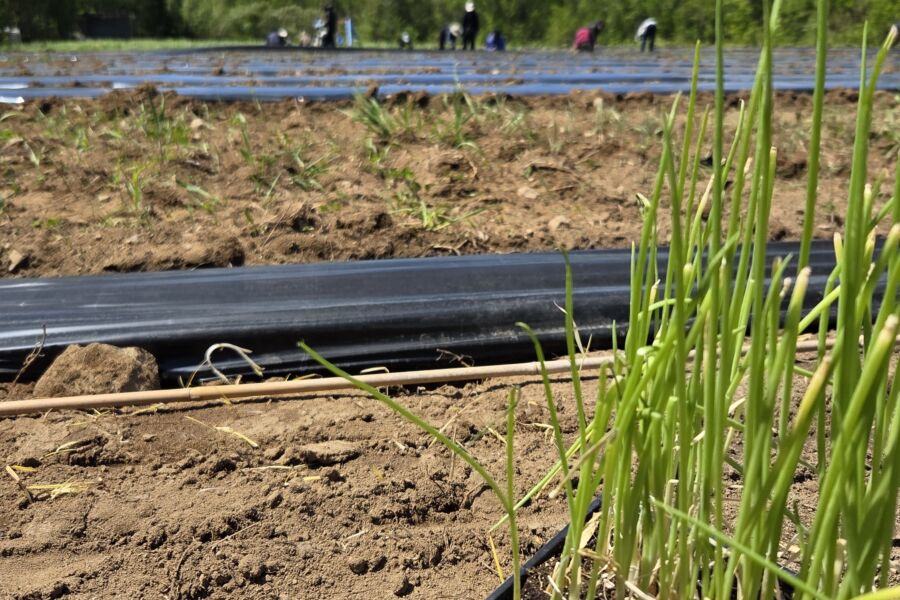
The event marked not only the biggest turnout for the event in its history, but also the first year with an irrigation system.
“All the previous years we’ve had to water plant by plant every day, morning and night,” said Murray. “It’s nice to know that there’s going to be less of the hard work to do.”
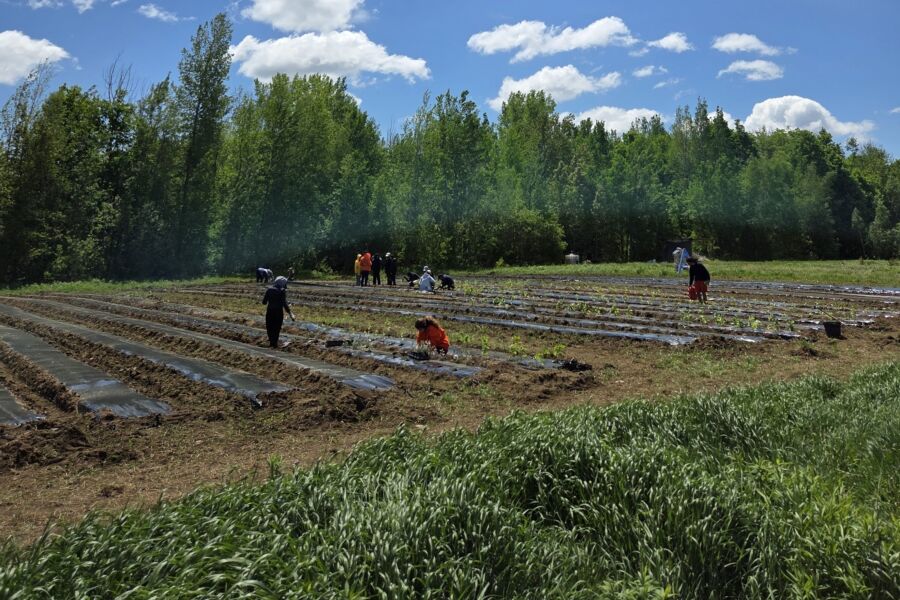

The new irrigation system will help Murray focus more on weed management, maintaining the garden, and expanding community programming.
Murray said that this year went particularly smoothly due to careful planning before the event. Volunteers and workers prepped the soil and rows in advance, allowing participants to focus on getting the plants in the ground.
“I thought it would feel more chaotic, but actually it’s going pretty smoothly,” said Katya Jutras, environmental educator at Innovation Jeunes and one of the organizers at Gardens of Hope.
Jutras organized and divided volunteers into smaller groups across the field; each group armed with instructions and a specific crop to plant.
“Part of the planting process with such a big group is trusting that people know what they are doing,” said Jutras.
Jutras added that Gardens of Hope is a place of healing, and a place where one can reconnect with food production.
“We don’t know how to approach the land anymore, and so the way that Murray is so intentionally wanting to engage in that reconciliation, healing for oneself and with the land, learning what it means to care for it properly, is incredible,” said Jutras.
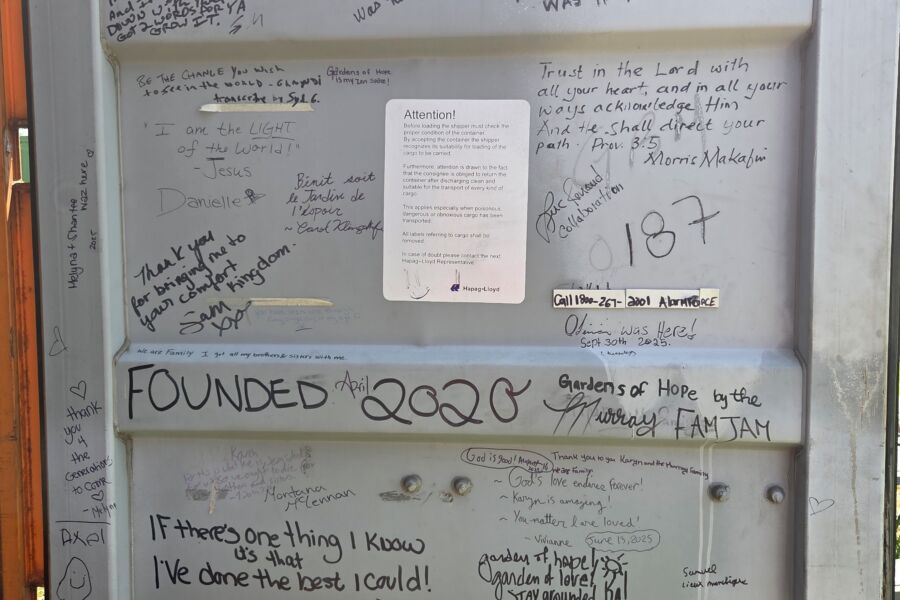



Many of the volunteers have now become close friends with Murray, Caleb Karch became involved with Gardens of Hope last year and now returns regularly to help with the garden.
“I’m not an outdoorsy person,” said Karch. “But this is the one time I really enjoy getting down on the ground and being with people and also doing something with nature.”
Participating in Gardens of Hope helped change how Karch thinks about food and where it comes from.
“It’s important to recognize where our nourishment comes from and the work that goes behind it,” said Karch. “It’s really cool for anybody to be able to see that and to be part of that process.”
Chris Barrigar, pastor of the Church of St. Mark and St. Peter, came with a group of youth from the church. The group diligently planted an entire row of onions over the course of the day.
“It feels very healthy, especially for us city folk, to get out here away from all the hustle and bustle,” said Barrigar.
Sign up for email updates from The Eastern Door
“This event gives us an opportunity to be together, to have connections while planting, and meet new people who care about the environment and food security,” said Barrigar.
“It means everything to me to see that all these different groups are coming and have a heart of giving back,” said Murray. “They’re spending the day planting our plants with us and creating ties of reconciliation toward the betterment of everybody.”
Murray shared that the garden’s transformation over the years mirrors her own journey. How working with the soil has helped rebuild her life and find purpose after struggling with addiction.
“I had no hope, and then one day I ended up with my hands in the dirt, and that’s where I started finding life,” said Murray. “It helped me to grow, because we are like plants at the end of the day.
“I find myself regenerating myself as I regenerate the garden. This garden nourishes me not only in the food that it produces, but also it nourishes me in the learning experiences that I have here.”
Fern Marmont, Local Journalism Initiative Reporter