On the Runway of Rezilience
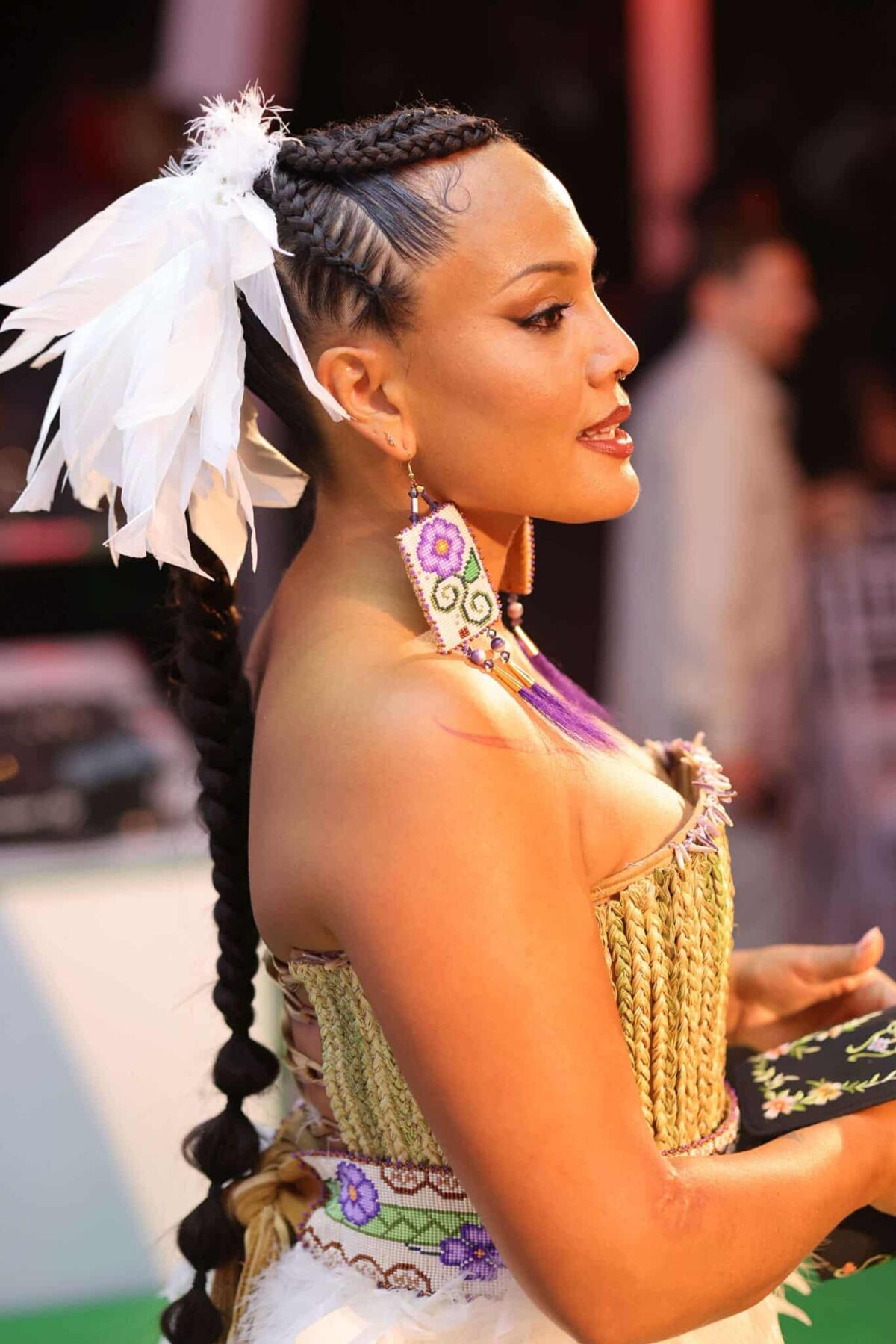
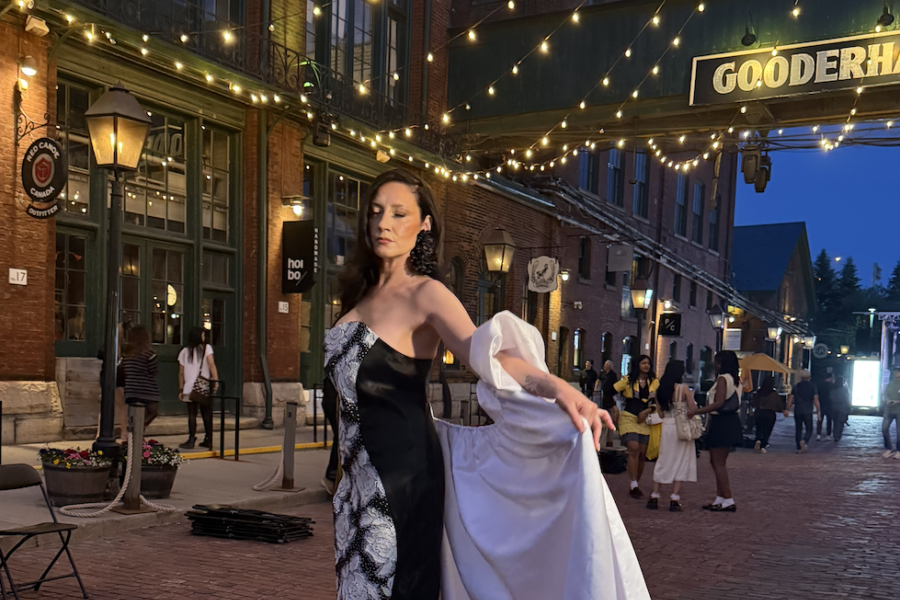
Brooke Rice shines at Runway of Rezilience, adorned in beadwork and braids styled by Tisha Thompson. Courtesy Tisha Thompson
The historic halls of Toronto’s Casa Loma glowed with energy during the Runway of Rezilience, an award-winning Indigenous fashion show that continues to redefine beauty standards and celebrate cultural identity.
Among the dozens of models and designers who brought the runway to life were four women from Kahnawake - Tewa’kerahkhwa Horn, Daisy Lahache, Brooke Rice, and Jayla White.
They stood out not only for their striking presence but also for the powerful stories they carried with them.
For Rice, stepping onto the runway was about reclaiming confidence. “I got into modelling when I was 16,” she explained. “Back then it was a harsh industry where people told me I was too short or too heavy. That turned me off completely. But fast forward to now, there’s this huge shift, body positivity, acceptance, and seeing all colours, shapes, and sizes represented. That inspired me to dabble back in,” she said.
Rice is more than a model; she’s an athlete, community organizer, and founder of Tkà:nios, a grassroots initiative focused on food sovereignty and cultural revitalization. She sees modelling as an extension of her work: “It was really empowering to be adorned with all that good energy, intention, and artistry. Knowing every stylist, designer, and artist was Indigenous made it even more powerful. It showed me we’re still here, flourishing in all aspects.”
For Horn, returning to Runway of Rezilience was equally meaningful. “It feels amazing to walk here,” she said. “The energy is always high, the models are excited, the artists are eager to see their work. It’s powerful and exciting.”
Horn modelled two distinct looks: one futuristic and fierce, the other natural and strong. “I always try to embody the vibe of the look,” she explained. “Matching my walk and expressions with the outfit makes it cohesive for the audience.”

Horn praised designer Tisha Thompson, whose collection blended tradition and innovation. “I watched Tisha create her collection all summer. She worked so hard, with so much authenticity and creativity. Wearing the basket skirt, so intricate and beautiful, made me feel powerful and feminine at the same time.”
Karin Francis, a beadwork artist, also expressed her gratitude and appreciation. “I really admire Tisha’s creativity,” she said. “I’m just dumbfounded when I look at her whole line coming together. She’s truly a visionary. Working with her felt effortless, like we were on the same wavelength, and seeing our ideas merge on the runway was just awe-inspiring.”
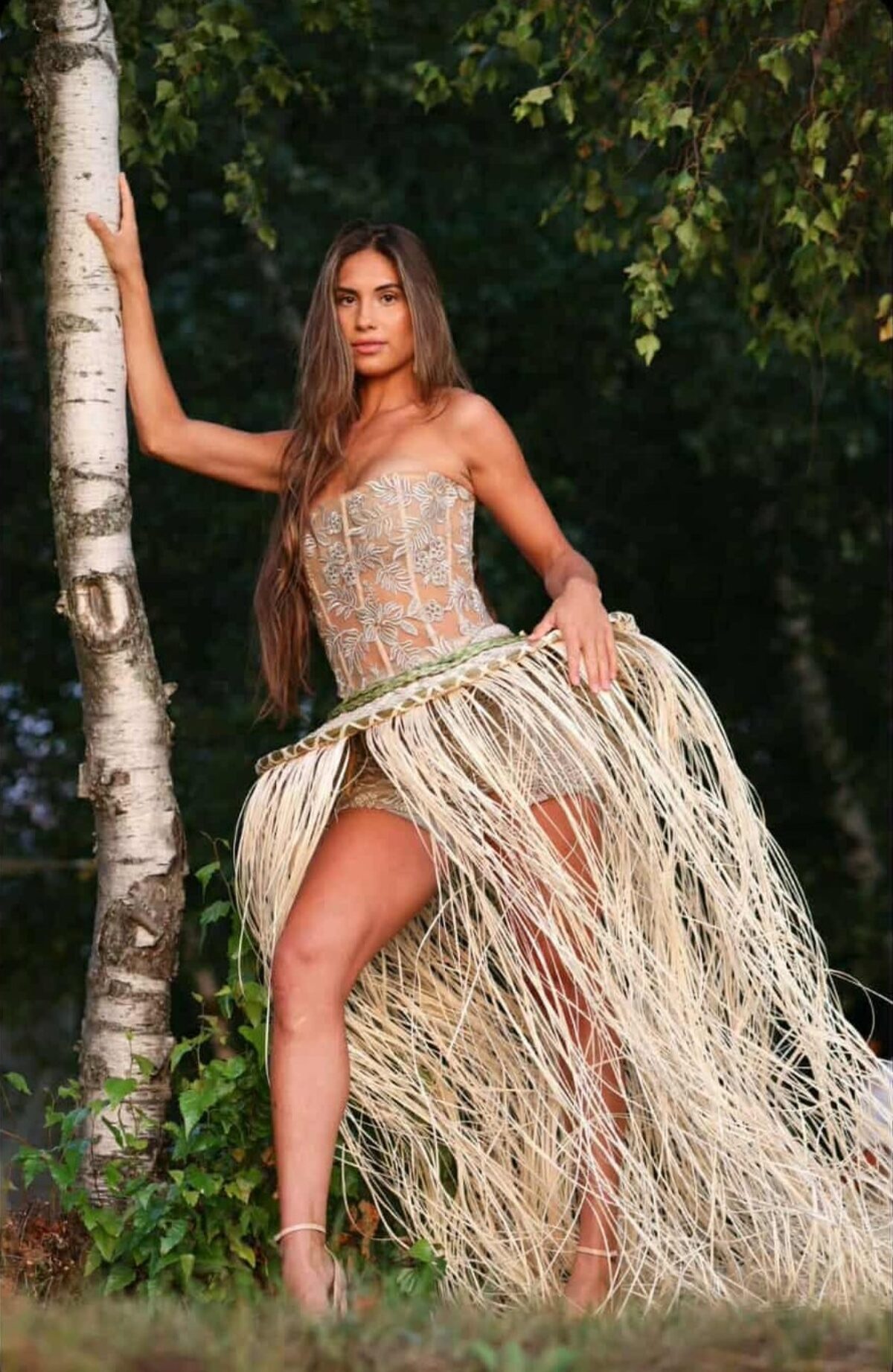
Tewa’kerahkhwa Horn embodies natural elegance and strength at Runway of Rezilience, styled by Tisha Thompson. Courtesy Tisha Thompson
White, at 16 the youngest of the Kahnawake models, brought a fresh perspective to the runway. White described the moment as exhilarating.
“It feels powerful to walk wearing our traditional clothes,” she said. “I felt proud representing Indigenous fashion and seeing the creativity and determination of all the designers and models. The months of preparation show how much pride and effort goes into these shows.”
White sees events like Runway of Rezilience as challenging mainstream beauty standards. “So many girls think, ‘I can’t be a model, I’m too short.’ But these shows are inclusive. Designers work with everyone from different shapes, sizes, and features. That makes each model unique, and it’s so beautiful,” she said.
At the heart of this celebration of culture and fashion is designer Tisha Thompson, whose collection drew praise across the runway.






Known for her ability to blend natural materials with bold design, Thompson collaborated with basket makers and beadwork artists like Stephen Jerome, Sr., to create wearable art pieces that told stories as old as the land. Her basket skirt, crafted with black ash and sweetgrass, became one of the show’s most talked-about designs.
Thompson expressed how her inspiration to pursue fashion evolved. “It’s like this life chose me; I didn’t choose it. What started as a hobby has become my path. I love collaborating, bringing others with me onto that stage, and watching our visions come together. Seeing those natural materials, basket splints, sweetgrass, quills transformed into high fashion on the runway, it just felt like it belonged there.”
No runway show is complete without the artistry behind the scenes. Hairstylists Deandra Wells and Raven Beauvais created intricate braids and avant-garde styles that elevated each look. Their work fused practicality with cultural symbolism, making hair part of the storytelling. “Every strand carried intention,” Wells said. “It wasn’t just about style; it was about honouring who we are.”
Beauvais also emphasized how much more experience and knowledge she was gaining from this experience. “Being so new to the industry, I was nervous the whole time, but once the models were on the runway it was breathtaking, like, wow, that’s my work up there. I’m so grateful I got to be part of it.”
Francis echoed this sentiment. Her handmade earrings and accessories embellished models with traditional materials like white-tailed deer hair and wampum. “Each piece holds energy,” she explained. “When the models walk, they’re carrying the work of our hands, our ancestors, and our creativity forward.”
Together, these collaborations transformed the runway into something greater than fashion. They became an affirmation of Indigenous resilience, artistry, and futurism. Backstage, the models described the most powerful moment as simply being in the same space together.
“It was mind-blowing,” Rice recalled. “Hairstylists, designers, models all Indigenous, all brilliant. It was Indigenous futurism in the present, keeping the past alive.”
Sign up for email updates from The Eastern Door
For White, it was the anticipation before stepping onto the runway. “That moment when you hear the music, feel the crowd’s energy, and know you’re next, it’s the most powerful. You just own it.”
And for Horn, it was the pride of representing not just herself, but her community. “Runway of Rezilience is more than a show, it’s networking, collaboration, and a chance to showcase our skills and talents. It pushes us forward while reminding us of where we come from.”
The event’s title proved fitting. Each model, designer, stylist, and artist carried resilience onto the runway, resilience rooted in culture, community, and creativity. For Kahnawake’s representatives, their presence was more than participation. It was a declaration: Indigenous beauty, strength, and brilliance are here, and they are shaping the future of fashion.