Jordan’s Principle failures heard at tribunal
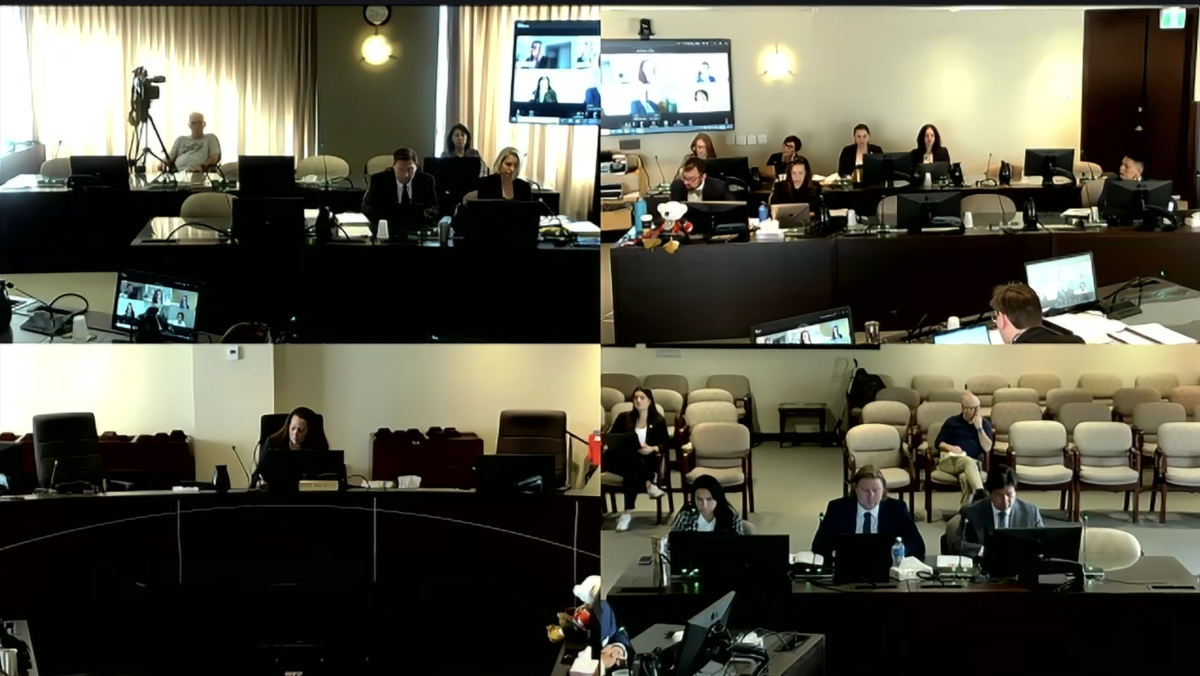
Leading child welfare advocate Cindy Blackstock told The Eastern Door this week that she found Canada’s excuses for issues with the implementation of Jordan’s Principle to be “very disappointing,” after attending a non-compliance motion at the Canadian Human Rights Tribunal (CHRT) in Ottawa.
“The failures have gone as badly as to include the deaths of children,” Blackstock said. “It’s not okay to ignore that.”
Blackstock is executive director of the First Nations Child and Family Caring Society (FNCFCS), which filed the non-compliance motion with the Tribunal back in 2023. Since then, parties and intervenors have been filing factums and affidavits, in preparation for the hearing, which took place over three days last week.
The FNCFCS brought forward the motion as a result of ongoing failures in the delivery of Jordan’s Principle, which was established to ensure First Nations children can access health, social, and educational support in a timely manner by covering the costs of services upfront.
However, there have been extensive delays in the program, with Indigenous Services Canada (ISC) revealing in submissions for this non-compliance motion that there were between 40,000 and 82,000 backlogged requests across Canada as of March 2024.
Those submissions also revealed that ISC consistently failed to meet deadlines for urgent requests - 12 hours - with some regions responding to only 15 percent of requests within the ordered time frame.

In non-urgent cases, where the deadline is 48 hours for a response, the rate was similar, and the region with the fastest response time still only responded to 44 percent of requests by the deadline.
FNCFCS said it’s critical that Canada be ordered to triage those backlogged requests for urgency and ensure that Jordan’s Principle contact mechanisms are sufficiently staffed with employees who have authority to review and determine urgent requests during and after business hours to ensure those deadlines are met.
Blackstock also criticized ISC for not being upfront about the backlogs and data on response times, which she said was only revealed as a result of the Tribunal submissions.
“They didn’t let anyone know that this problem existed, because they didn’t want anyone to know they were being non-compliant,” Blackstock said. “They’re trying to sweep this stuff under the rug, and I told them, ‘Why didn’t you come to us when you had 20 cases in the backlog? Why did you wait for a minimum of 40,000 cases before doing anything?’
“They’ve had eight years to put up a system that really responds to children’s needs, and they haven’t done that yet. That’s the disappointing part,” Blackstock said.
Lawyer Dayna Anderson told the Tribunal last week that ISC “takes issue with the idea that Canada somehow hid noncompliance and backlogs.”






She said that the Caring Society has been raising timeline compliance issues since 2018, meaning that the issue of backlogs shouldn’t be surprising. She also said that Canada did not approve of the relief sought by the Caring Society from the Tribunal at the hearing, which includes an order that Canada appoint sufficient staff in each ISC region to manage urgent requests, an order to ensure that all First Nations organizations who have taken on delivery of Jordan’s Principle have sufficient and sustainable resources to do so, and an order to implement an independent complaints mechanism.
Anderson also stated that those proposed mechanisms for reducing backlogs and bettering the system are “overly complex” and that ISC doesn’t want that approach “imposed upon us.”
“The Caring Society’s concerns about backlogs are absolutely valid, but they are not public administration experts, and their approach is untested and no better than any other party’s,” Anderson said. “We’re at a point in time where Canada should be permitted to negotiate with First Nations partners, and the Caring Society’s view should not eclipse the wishes and preferences of First Nations.”
The program ultimately needs more accountability, Blackstock said, which should also come from the Caring Society’s proposal that the CHRT order the creation of an independent complaints mechanism.
Canada said the request for that order should be dismissed, as it would only add more bureaucracy to the system - another point Blackstock criticized, as the complaints mechanism would be independent of ISC and thus wouldn’t be an undertaking for Canada to create.
“There is so much need out there. Canada’s non-compliance is so great, so you really need one number that people can call where they can get support and assistance when the federal government isn’t fulfilling its obligations under Jordan’s Principle,” Blackstock said. “That group can also track systemic issues that are happening across the country and address them.”
Sign up for email updates from The Eastern Door
A decision from the Tribunal may take some time, but could come as soon as the next few weeks.
This article was originally published in print on September 20 in issue 33.38 of The Eastern Door.