Growing together at Concordia
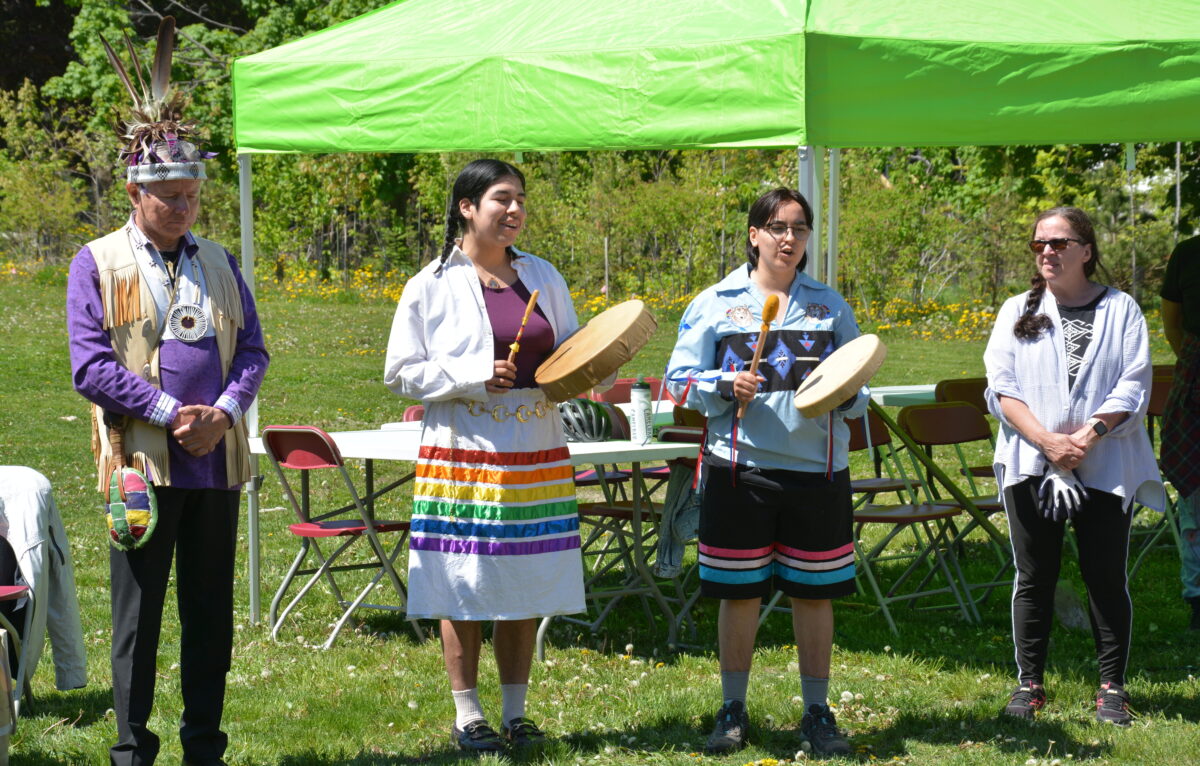
Concordia students Arlo Price and Alex Kack (middle) drum and sing, after Ka’nasohon Kevin Deer (left) had said a few words in English and Kanien’kéha and did some drumming to inaugurate the new Indigenous Garden at the Loyola Campus. Olivier Cadotte The Eastern Door
At Concordia University’s Loyola Campus, where there was once an empty lawn, there will now be the fruits - and vegetables - of the work Indigenous students have done to create their own garden on campus.
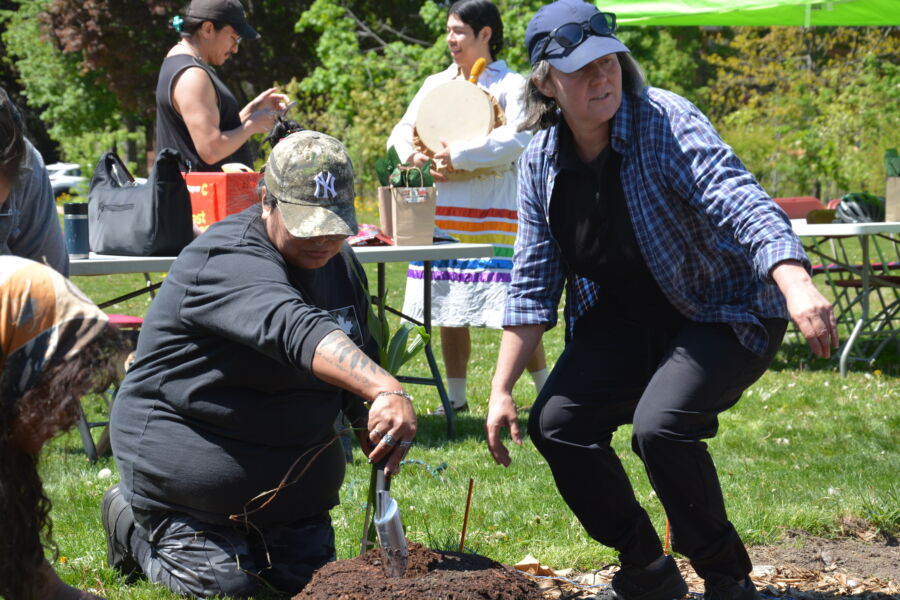
The new Indigenous Garden on campus had its opening ceremony and first plantings last Friday, with a dozen students and university community members there to celebrate the opening and put in the first seeds and plants.
That included an opening ceremony, with Kahnawa’kehró:non elder Ka’nasohon Kevin Deer saying a few words in English and Kanien’kéha and doing some water drumming, before Concordia students Arlo Price and Alex Kack also did some singing and drumming.
“It’s surreal that it’s actually happening,” said Angela Ottereyes, a Cree student from Waskaganish who just finished her first year in the First Peoples studies program.
The idea first germinated when Akwesasró:non Louellyn White, an associate professor for the First Peoples Studies program, was spending time outside with graduate students in the fall at the Loyola Campus.
“We spent part of our days outside, just being on the land, and we saw all those amazing, beautiful gardens,” said White.

One of the students, Alicia Ibarra-Lemay, suggested the idea of an Indigenous garden.
“That just sparked something,” said White.
From there, White got in touch with a few people, including Concordia’s biodiversity coordinator Jackie Martin, who helped to determine the best spot on campus for the garden; where it currently stands, a short walk away from the People’s Potato garden, was picked because it was sunny and accessible.
In October, Ottereyes was one of the students who took White’s proseminar 297 course called “Indigenous Ways of Knowing,” where students planned the garden and learned to build a raised bed, what seeds they should plant, where to get them, budgeting, and more.
“Most of us, including me, have had no experience with gardening, so we were all learning during the process,” said White.
The following semester, Ottereyes was part of a bigger seminar given by White, where more students added themselves to the project and picked up where the other group had left off.


“We presented our document to them and said, ‘hey, this is what we started, this is where we want to pick up, and if you guys want to change it, go ahead,’” said Ottereyes.
“I’m really happy with the second group.”
Daley Trainer, a mixed settler-Ojibwe design student, helped come up with the layout of the garden: a swirl pattern, with walkways and many points of entry.
“He didn’t ask what they wanted it to look like. He said, ‘What do you want it to feel like?’” said White.
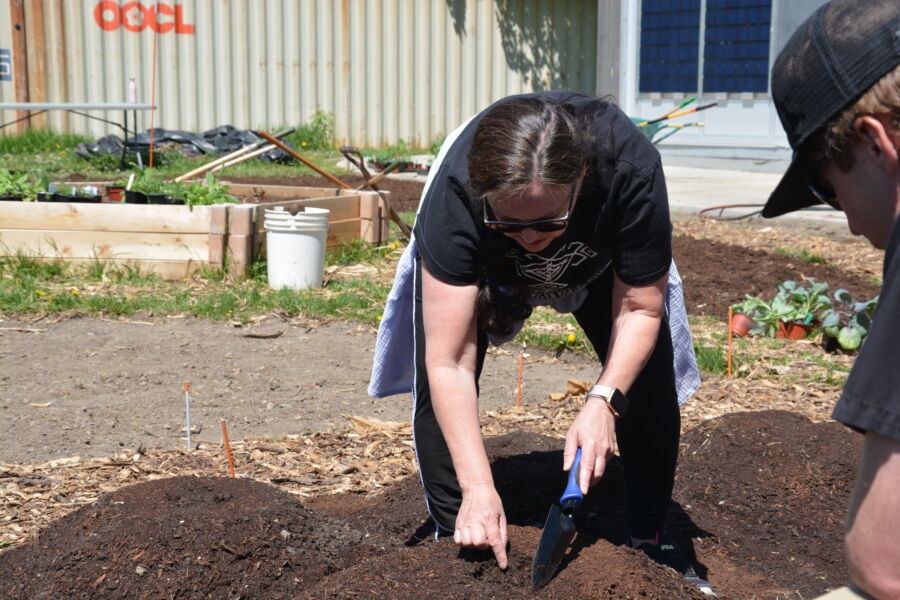
Following that came planting and caring for seedlings, the removal of the grass and sod from the plot, and constructing the raised bed in preparation for the opening.
On Friday, it felt like a job well done, even as the tobacco, corn, beans, and squash seeds, as well as the tomato plants and Ottereyes’ “corn babies” had just been planted.
“I consider it a success. A lot of the seedlings we started with grew and a lot of them are going into the ground, which I’m really happy about,” said Ottereyes.
Sign up for email updates from The Eastern Door
“But, there’s still a lot work to be done.”
For White, it was a very proud day, seeing students come help with the garden even after their educational obligations to the project had been completed - the winter semester ended in April.
“It’s been a lot of physical labour, and when the semester was over, students still came back to take care of their seedlings, to water them, to visit them, to nurture them, to transplant them,” said White.
“My heart is so full. I get teary-eyed. I’m so happy of all the work that students have put into it and what it means to the students. I feel really lucky, and this is when I really love my job, that I can help facilitate something like this.”