Back to child welfare negotiating table

A proposed $47.8 billion settlement agreement for a 10-year reform of First Nations child and family services in the country was shot down last week, after 267 chiefs and proxies voted against it at a special chiefs assembly hosted by the Assembly of First Nations (AFN).
The final agreement offered by Canada was rejected in a vote in Calgary on Thursday, October 17, which saw 147 voting in favour, and one abstention. It came after two tense days of heated debate over the proposal.
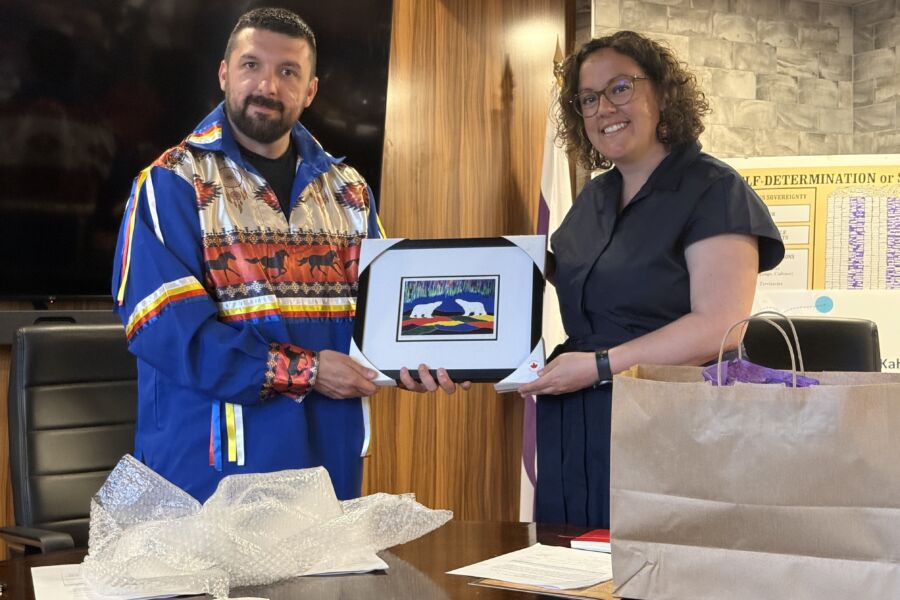
Executive director of Kahnawake Shakotiia'takehnhas Community Services (KSCS) Derek Montour said he’s relieved to see the outcome of the vote.
“We support the motion to not go forward with the agreement,” said Montour, who watched the assembly remotely. “Now go back to the table. There's a lot of progress made on the agreement so far, but more can be done on behalf of our children.”
He said the agreement offered didn’t go far enough to ensure Canada’s First Nations Child and Family Services Program would have enough funding to operate long-term.
“Our interest is to ensure long-term sustainability, and to have a child and family services program that can adequately fund the services we envision,” Montour said. “The agreement theoretically does that, but it also was missing some key elements.”
Capital funding for the construction of new buildings was not part of the agreement, he said, and would have blocked organizations like KSCS from being able expand services.

“You can't increase services without having a place to put staff,” Montour said. “No infrastructure resources were set aside.”
Mohawk Council chief Arnold Boyer attended the assembly in Calgary on behalf of the Mohawk Council of Kahnawake (MCK). The band council refrained from taking part in the vote however, choosing instead to just observe.
“The AFN does not speak for the Mohawks of Kahnawake,” said Boyer, who’s on the health portfolio. “It’s our children, and we can't just have anybody speak on behalf of our children and our community.”
He was also pleased with the outcome of the votes, saying the agreement didn’t go far enough to challenge the status quo.
There were also concerns raised by many over a lack of coast-to-coast representation among those who would have been tasked with overseeing the program’s reform, he said. Had the agreement been approved, that oversight would have been handed over to the AFN, the Chiefs of Ontario, and the Nishnawbe Aski Nation representing communities in Northern Ontario. These parties negotiated the draft deal with Canada this past July.
“It was pretty rushed. There was a lot of tension at the assembly, and heated discussion and debates on the issue,” Boyer said. “It was frustrating for everybody.”
The $47.8 billion offer comes in response to a 2016 ruling from the Canadian Human Rights Tribunal that found Canada had discriminated against First Nation children and families across the country by failing to provide the same quality of child welfare services available elsewhere.



A separate $23 billion settlement agreement – the largest in Canadian history – has already been approved to pay out damages to those who were harmed by Canada’s discriminatory child welfare policies, which resulted in an overrepresentation of Indigenous children in government custody over decades.
That agreement was revised up from $20 billion after the First Nations Child and Family Caring Society of Canada (FNCFCS) argued that this figure was insufficient.
The $47.8 billion deal that was just rejected meanwhile covers costs involved in reforming the child and family services program.
“It was broadcast as a deal that would provide $47.8 billion over 10 years, but closer scrutiny really showed that those amounts were subject to a lot of discretionary decision-making by Canada, and that there was a governance system that would take away decision-making from First Nations,” said Cindy Blackstock, executive director of the FNCFCS, which was behind the discrimination complaint brought forward to the Canadian Human Rights Tribunal.
The agreement would have also expired in nine years, she said, leading to concerns about what would happen after then.
“The money was structured in such a way that it would not eliminate the discrimination or prevent it from happening again,” Blackstock said.
A resolution was adopted on the last day of the assembly to form a national children's chiefs commission that’ll be tasked with renewing negotiations with Canada over the reform package.
Sign up for email updates from The Eastern Door
National AFN chief Cindy Woodhouse Nepinak was disappointed to see the deal rejected.
“This agreement was too much of a threat to the status quo, to the industry that has been built on taking First Nations children from their families,” she said in her closing remarks last Friday. “It’s a big business, our children,”
She had been urging its adoption, saying the day prior it was “too much money to just wipe off the table and leave to the courts."
“The results of this assembly should be a message to the government of Canada and all provincial governments in this country that you need to do better. Last year, we had more First Nations children removed from their communities and families than at any other time in Canadian history,” she added.
“Canada and the provinces will need to do more to account for the harms they have caused by perpetuating a racist child welfare system that has broken so many children in this country.”
The AFN will host another special chiefs assembly in Ottawa this coming December.