Minister challenged on lack of action
Courtesy National Assembly
A summary of pleas from Kanehsata’kehró:non desperate for support was read out at the National Assembly this week as the provincial government was questioned for its sluggishness in confronting the organized crime running roughshod over Indigenous communities like Kanesatake.
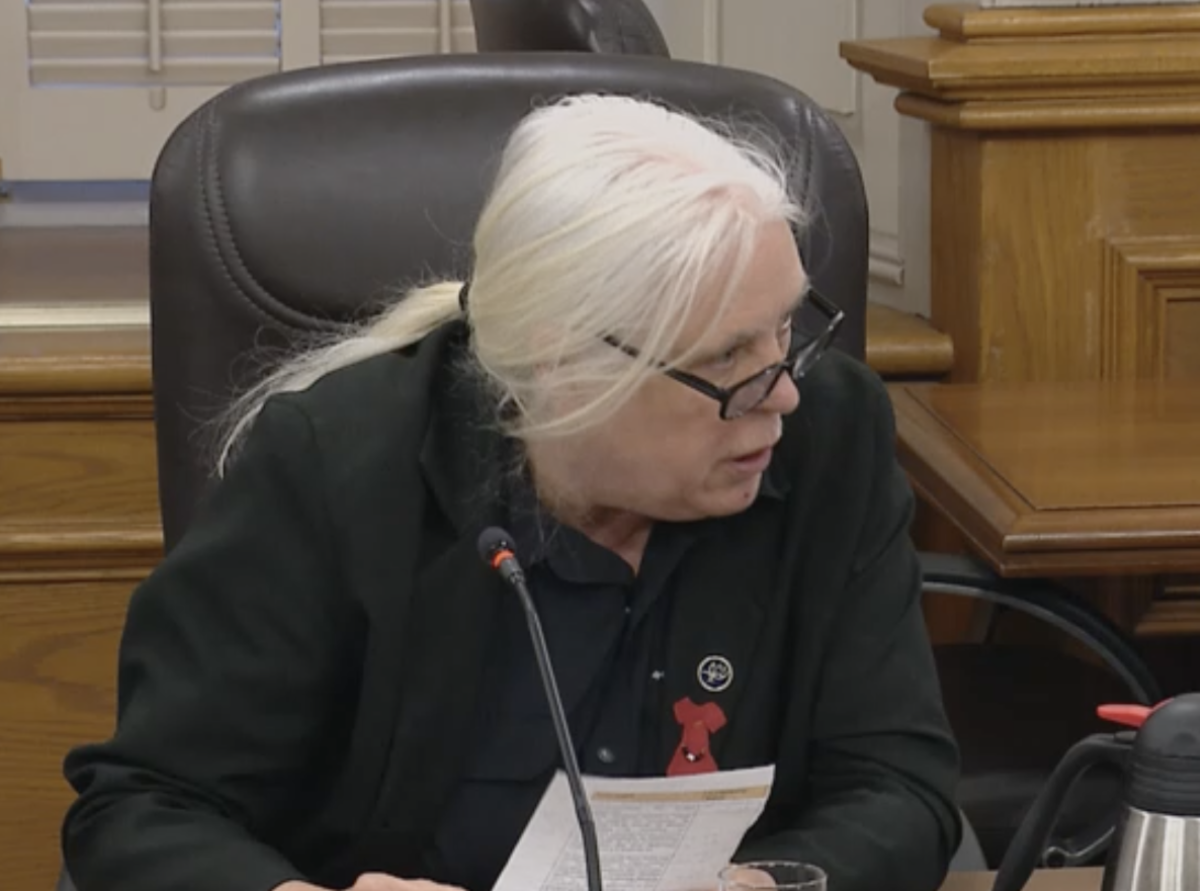
“I only have one question: where is the solid, concrete action plan that you told us you were going to put in place, and that the citizens of Kanesatake and elsewhere are impatiently awaiting?” asked Manon Massé, the Member of the National Assembly (MNA) Sainte-Marie–Saint-Jacques and the former co-spokesperson of Quebec Solidaire, in the National Assembly’s Red Room.
The debate was part of a parliamentary committee session scrutinizing Executive Council budget appropriations in relation to Indigenous affairs.
Massé prefaced her question to Ian Lafrenière - Quebec’s minister of Indigenous affairs going back years, who has since also become minister of Public Security and vice-premier - with a rundown of the community’s plight, as shared with her by community members.
“The people with whom I’m in touch, of course they want more than speeches because they have been abandoned for years and years,” Massé told The Pines Reporter, with a demand for an independent national inquiry still languishing.
She told the committee about renewed reports of trucks dumping soil day and night, music blaring, gunshots at all hours, street racing, and toxic effluent still flowing from the shuttered G&R Recycling site.
“You understood: I am talking about Kanesatake,” she told the committee. “Organized crime has taken over, and they’ve been ruling for years. Citizens live in a lawless zone. You know that, Mr. Minister.”
She and Lafrenière met several times with Kanehsata’kehró:non last year.

Lafrenière has repeatedly shared concerns about organized crime with The Pines Reporter, often citing political turmoil at the Mohawk Council of Kanesatake (MCK) as a complicating factor that makes the community more vulnerable.
In February, Lafrenière suggested to The Pines Reporter that a plan to confront the situation and similar ones would be announced “in the coming weeks,” but Kanesatake is still waiting.
Massé told The Pines Reporter she has been hearing about a robust plan for a year, following years of discussion.
The promised action plan would build on an organized crime bill passed in April, which, among other things, bans the display of logos or patches associated with organized crime groups like the Hell’s Angels, far from the concrete intervention Kanesatake needs, Massé suggested.
“Last year he told me, ‘Be patient, be patient,’ but how could we be patient when gunshots are all around, when the trucks were transporting contaminated soil? It starts again to come inside the community, dumped in the lake,” she said. “People need this plan.”
Massé told The Pines Reporter that Lafrenière is in a position to take meaningful action given his rising profile in government, that he has all the authority he needs to do something.
“In my mind, what I understand, police have all this information. They know all their names, they know everything they do, but now it’s time to act, and act with the people in the community because without that the community won’t heal. It’s for too long a time now.”
She credited community members and concerned citizens for pressuring the province to take the limited steps it has taken so far, such as road-check training organized by Oka residents and others who vowed to independently intervene in dumping if the government continued to fail to do so.





It has been three years since an anonymous group of Kanehsata’kehró:non led the charge in bringing the community’s struggles with crime and environmental abuses to national headlines, but little concrete action has been taken since then, besides an intervention into dumping in the Lake of Two Mountains, which mostly targeted community members rather than external actors profiting from cheap disposal of contaminated soils.
“People are afraid, and I totally understand them,” Massé said.
Massé said the community members she speaks to don’t believe the government has the political will to support them, even as they continue to push for change.
“The one who has this responsibility, it’s the minister of public security, not the people who are living there, who have to fight against organized crime with only their hearts and the love of their children and Mother Earth,” she said. “It’s time to do something, it’s really time.”
She said it’s important to work directly with people in the community, rather than just focus on band council, in working to solve the urgent problems that are threatening health and safety in Kanesatake.
“When you want to heal something, you need everyone,” she said.
Lafrenière was not available for an interview before deadline. In response to the points Massé raised at the National Assembly, Lafrenière acknowledged he is hearing the same fears and outrage directly from Kanehsata’kehró:non.
He told the National Assembly the schism at band council and continued governance problems, a reference to the uncertainties caused by the suspended MCK election that was slated to be held over nine months ago, has disrupted efforts to remediate G&R Recycling and to take certain other actions.
Sign up for email updates from The Eastern Door
He is in talks with the federal government, he added.
Massé responded that Kanesatake is not a reserve, and that despite talks with Ottawa, Quebec itself has a responsibility to the community.
Lafrenière said a new initiative will soon be announced.
Marcus Bankuti, Local Journalism Initiative Reporter