Horn-Miller hosts at Hall of Fame
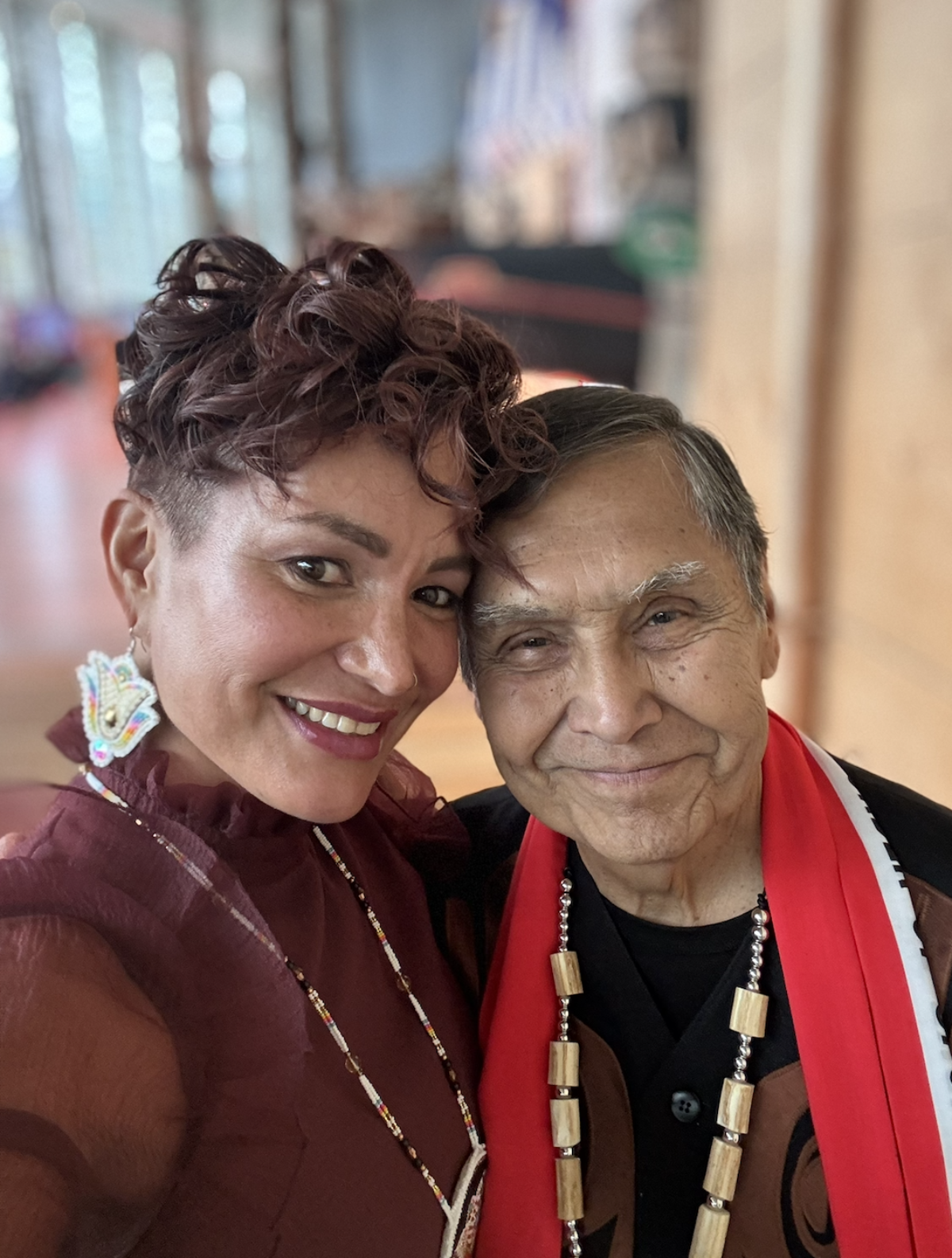
Since she was young, Olympic water polo player Waneek Horn-Miller has looked up to fellow Indigenous athletes and leaders. Amongst them are Alex Nelson and Angela Chalmers, two individuals who have pioneered inclusion in sports and led the way for others, like Horn-Miller, to follow in their footsteps.
Last week, at the Canadian Museum of History in Gatineau, Horn-Miller inducted Nelson and Chalmers into Canada’s Sports Hall of Fame, a full-circle moment that she said was an honour.
“It’s always been such a pleasure for me to get a chance to tell the people who gave me a little bit of medicine to help me through hard times how much they mean to me,” said Horn-Miller, who was inducted into the Hall of Fame herself in 2019. “When I was asked to do this and I checked who was being inducted I just said, ‘Oh my god, yes, of course.’ I wanted to be a part of it.”
Nelson is a member of Musgamaqw-Dzawada’enuxw First Nation in British Columbia, and was recognized in the “builder” category for transforming access to sport for Indigenous communities across Canada. He helped spearhead the early years of the North American Indigenous Games (NAIG), serving as the organization’s president three times, and becoming the first-ever chairperson.

Nelson has also served as an elder and senior advisor for the Indigenous Sport, Physical Activity, and Recreation Council in British Columbia, and has spoken publicly about the impact sport has had on his life as a residential school survivor – playing soccer, he says, helped him survive seven years at residential school in Alert Bay.
“I’ve known Alex since I was a teenager, and he has always been one of those super positive, uber kind people, who has been able to take a lot of trauma in his life and turn it into things that are full of love and positivity,” Horn-Miller said. “He’s an incredible person and he’s spent his life advocating for sports and for Indigenous people.”
Chalmers, who is a member of the Birdtail Sioux First Nation, has also been a lifelong inspiration for Horn-Miller, and was initiated into the “Athlete” category of the Hall of Fame. A track-and-field superstar, Chalmers is an Olympic bronze medallist and three-time Commonwealth gold medalist in 1,500m and 3,000m events.
She was a particular inspiration for Horn-Miller, who watched Chalmers win her bronze Olympic medal in 1992, just two years after the Siege of Kanehsatake.


“I remember I’d just graduated high school, and Kahnawake was still really struggling with the after-effects of the (Oka) Crisis, and I was too,” Horn-Miller said. “I’d stopped playing water polo. I didn’t know what I wanted to do. And it was just a really, really incredible thing to see her win her medal.”
Seeing Chalmers succeed, particularly in such a competitive sport, helped push Horn-Miller forward – a feeling likely felt by many Indigenous athletes across Turtle Island, she said.
“For her to win a medal and be an Indigenous woman, you can’t quantify how important that is for someone like me to see. That excitement, the possibilities that came with it, it’s contagious,” said Horn-Miller, who still remembers the photo of Chalmers that hung on her wall in her youth.
The duo was a perfect pair to be inducted into the Hall of Fame, Horn-Miller said, because their achievements show the importance of different facets of the sports world working together to foster Indigenous success.
Sign up for email updates from The Eastern Door
“We can’t just have role models, we also have to have people who help make those dreams a possibility. With these two people, Angela was the dream and hope re-igniter, and Alec was one of those people who helped make possibility, and made those dreams become something,” she said.